A first window quote almost always arrives with a payback number attached. Eleven years. Seven years. Sometimes four, if the estimator is feeling optimistic and the utility rates in the spreadsheet came from a different state. The number is not usually dishonest. It is just doing more work than it can carry, because it treats energy as the whole reason a person replaces a window, and energy is rarely why anyone actually picks up the phone.
People call because a sash will not stay up. Because the bedroom on the north side is eight degrees colder than the hallway. Because the seal failed and the glass looks permanently fogged, and no amount of cleaning touches it. Those are the real triggers. Energy savings ride along.
Ten years ago the decision was mostly about the glass. Now it is mostly about the crew
A decade back, the interesting variable in a window quote was the unit itself. Single pane versus double. Whether the double-pane unit had a low-emissivity coating, and which surface it sat on. Whether the cavity held argon and whether that argon would still be in there in fifteen years. Homeowners learned a small vocabulary and then shopped it.
That vocabulary still matters, but it has narrowed. Insulated glass with a low-e coating is now the default across most of the market, not the upgrade. Two manufacturers' mid-tier double-pane units are far more alike than they were in 2015. The spread between a good product and a mediocre one has compressed, and the spread between a good installation and a sloppy one has not compressed at all.
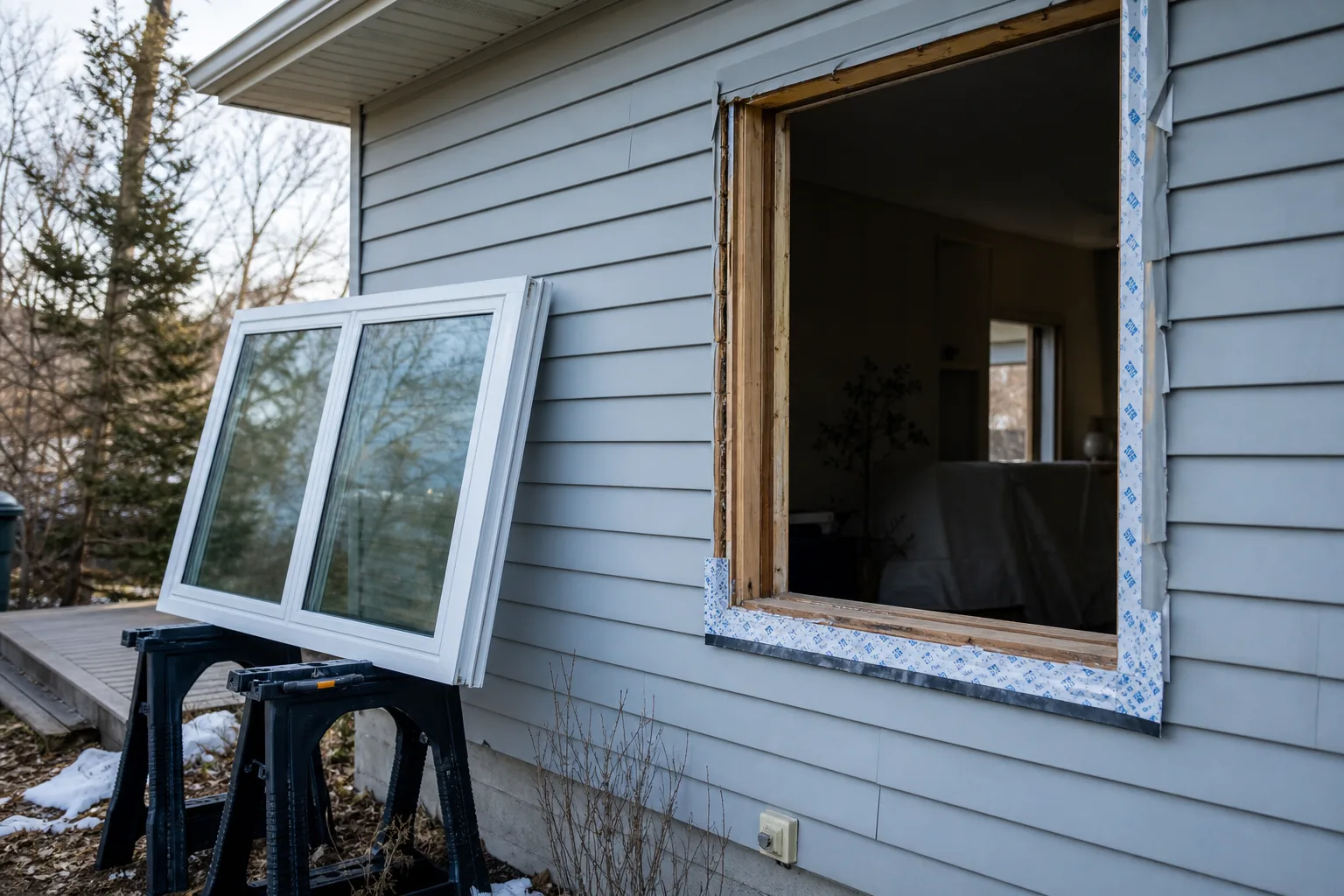
So the variable moved. What separates a project that performs from one that disappoints is now overwhelmingly the work at the opening: how the old unit comes out, whether the rough opening is dry and square, how the flashing is lapped, whether the shims are set so the frame is not racked, and what goes in the gap between frame and framing. A perfect unit installed with expanding foam jammed hard enough to bow the jamb will underperform an ordinary unit installed carefully. First-time buyers spend their research time on the glass because the glass is what the brochure discusses. The crew is what the outcome depends on.
What double glazing reliably does
It raises the interior surface temperature of the glass. That is the mechanism behind almost everything else people notice. A warmer inner pane means less condensation on cold mornings, less of the cold-wall sensation when you sit near the window, and less of the downdraft that makes a room feel drafty when there is no actual air leak. In a room people avoid in January, that change is immediate and obvious in a way that a utility bill never is.
It reduces heat loss through the assembly, genuinely. The Department of Energy oversees efficiency standards and labeling for residential windows, and the performance ratings on the sticker are the honest place to compare units. Read them. They are more useful than any claim made out loud.
It also does something the energy conversation ignores: it fixes operation. New hardware, sashes that lock, a frame that is not rotted. For a lot of first-time buyers, that is most of the value, and there is no shame in saying so.
What it does not do, and where the payback math quietly breaks
Double glazing will not fix air leakage that is happening somewhere other than the window. In older housing, the losses that dominate are usually at the top of the building and at the band joist, not at the glass. Replacing eleven windows in a house with an unsealed attic hatch and no insulation over the garage ceiling will produce a smaller change than the quote implies, and the homeowner will conclude the windows were oversold. The windows were fine. The order of operations was wrong.
It will not make a meaningful dent in cooling load on its own if the problem is direct sun on a west exposure. That is a solar gain question, answered by coating selection, exterior shading, or a tree, not by adding a second pane.
And it will not save what a sixty-month payback claims when the payback was calculated against a single-pane baseline and your existing windows are already double-glazed but tired. Replacing a failed double-pane unit with a new double-pane unit is a repair with comfort benefits. The energy delta is small. Say that out loud before you sign, and see whether the estimator agrees.
The paperwork changed more than the product did
Here is where the local picture matters, and where first-timers get surprised. Ten years ago, a straight one-for-one replacement in an existing opening often moved without much municipal attention. That has tightened in a lot of jurisdictions. Energy code adoption cycles have pulled more of these jobs into permitting, and where a bedroom is involved, egress dimensions get checked. A replacement unit inserted into an existing frame is smaller than the frame. In a bedroom, that shrinkage can put the clear opening below what the inspector needs to see, and the fix is a full-frame replacement at a different price.
Ask, before you accept anything: is this permitted, who pulls it, and will the clear opening still meet egress. A contractor who answers those three without hesitating is telling you something about how many of these they have done in your town.
The commercial side moved the same direction, harder. Storefront and curtain wall work carries safety glazing requirements, structural review, and often after-hours scheduling, which is why a small business owner replacing a broken storefront panel gets a different kind of company than the one that does houses. A commercial glass company is set up for tempered and laminated inventory, aluminum framing systems, and inspections on a schedule, and that is a different operation from a residential replacement crew even when the glass looks similar from the sidewalk.
How to buy it the first time
Get three quotes and make them describe the same scope, because insert replacement and full-frame replacement are not the same job and will not be the same price. Ask what happens if the crew opens a wall and finds rot, and get the number for that before it is found rather than after. Ask who does the work, employees or subcontracted crews, and how many openings they finish in a day. Four to six is a working pace. Twelve is a warning.
Then buy the comfort, the operation, and the durability, and treat the energy savings as the part that shows up quietly over years. Priced that way, the decision holds up.