A homeowner calls about a water heater install that flooded a finished basement. She has sixty photographs. All of them were taken after the water was pumped out, all of them show the same three feet of baseboard, and not one of them shows the connection that failed, because the installer took that away in his truck. She also has a three-line text message from the contractor that reads, in part, "we'll take care of it." That text is worth more than all sixty photographs combined, and it cost nothing.
This is the pattern in almost every dispute file. The evidence that decides the thing is cheap or free. The expensive evidence is usually bought late, bought to cover a gap that could not have been filled by then, and bought because somebody suggested it would look serious.
The free tier does most of the work
Before anyone spends a dollar, there is a layer of evidence that is already free, already in existence, and routinely ignored.
- Text messages and emails, exported in full rather than screenshotted in fragments. The full thread includes the parts that hurt you, which is exactly why it reads as credible.
- The contract, the change orders, and the estimate that preceded them. Three documents, usually in a drawer.
- Bank and card records showing what was paid and when.
- Photographs with intact metadata, meaning the original files off the phone rather than images pasted into a document.
- Your own dated notes, written the same day, in ordinary language.
None of that requires a professional. All of it is contemporaneous, which is the quality that makes evidence hard to argue with. A note written on the day of the visit carries weight. The same note reconstructed four months later carries much less, and everyone reading the file can tell the difference.
What makes a piece of evidence expensive
Cost in a dispute tracks one variable more than any other: whether the document contains a fact or an opinion.
Facts are cheap. A photograph is a fact. A delivery receipt is a fact. A meter reading is a fact. You can produce them yourself and nobody charges by the hour.
Opinions are expensive, because someone with a credential has to attach their name and their liability to a conclusion. A licensed engineer writing that a footing was undersized is selling you judgment, exposure, and the possibility of being deposed about it later. That is priced like skilled professional time, usually with a site visit, a written report, and a separate rate if they ever have to testify. A second contractor's written estimate to correct defective work sits somewhere in between: it is partly opinion, and many will do it for a modest fee or fold it into the job if they get it.
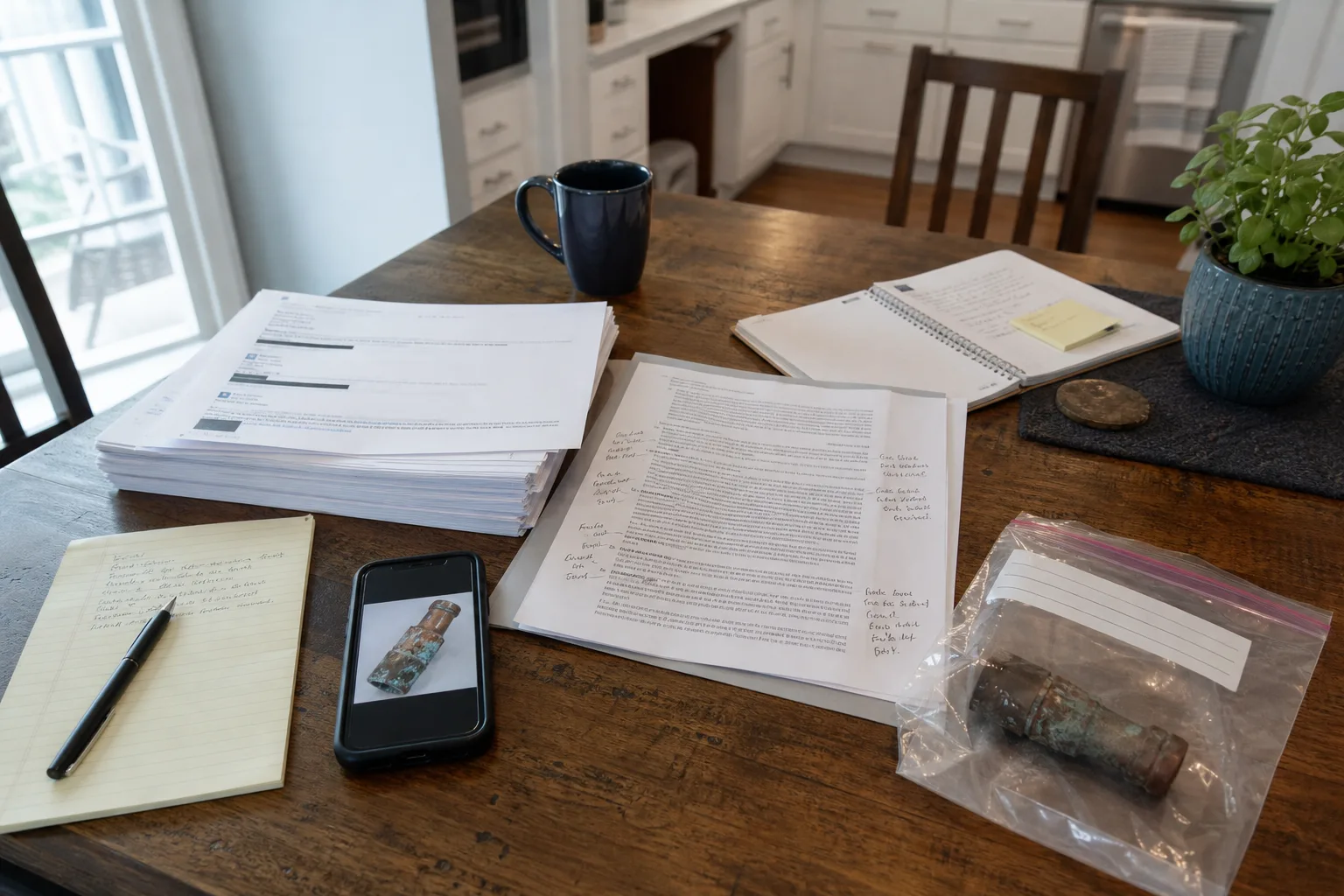
The other cost driver is destruction. If the thing in question has been repaired, replaced, or hauled away, the cheap tier is gone and only the expensive tier remains. This is why the single most cost-effective act in a dispute is refusing to let the evidence leave, or photographing it thoroughly before it does. The failed supply line in a box in the garage is worth a great deal. The same part in a dumpster is worth an engineer's retainer and still proves less.
The paid items that are usually worth it
Across a lot of files, three purchases earn their keep.
A second trade's written assessment, obtained while the defect is still visible. It converts your complaint from a story into a number, and the number is what a claims department or a small claims judge can act on.
Certified mail or another delivery method that produces a receipt. Small cost, and it ends the entire category of argument about whether notice was given. A great many disputes turn on a deadline, and the party who can prove the date of their letter is usually the party who wins that part.
A transcript or written confirmation of a phone call. Send a short email after any significant call summarizing what was agreed. Free, and if it is never contradicted, it tends to be treated as accurate.
The purchases that usually do not earn their keep are the ones bought to impress: the full forensic report in a four-thousand-dollar dispute, the expert retained before anyone has confirmed the other side has money or insurance, the second opinion that merely repeats the first.
Match the spend to the amount in dispute
Someone who handles these repeatedly asks one question before authorizing any expense: what is the realistic recovery, and what fraction of it am I about to spend proving a point that is already conceded? If the other side has admitted the defect and is arguing about scope, an engineer adds nothing. If they are denying the defect exists, that is precisely the moment the engineer becomes the cheapest route to a resolution.
Consumer complaint practice at the federal level sits with the Federal Trade Commission, which oversees how businesses handle consumers and how complaints are collected. State attorneys general and licensing boards take complaints too, and their forms are free. For many disputes, the paid evidence never has to be bought, because a well-organized free file is enough to get the matter settled.
The simplest version of this is usually available and usually not offered. Keep the broken part. Export the whole thread. Write down the date. Then decide, with a number in front of you, whether anything else is worth buying.