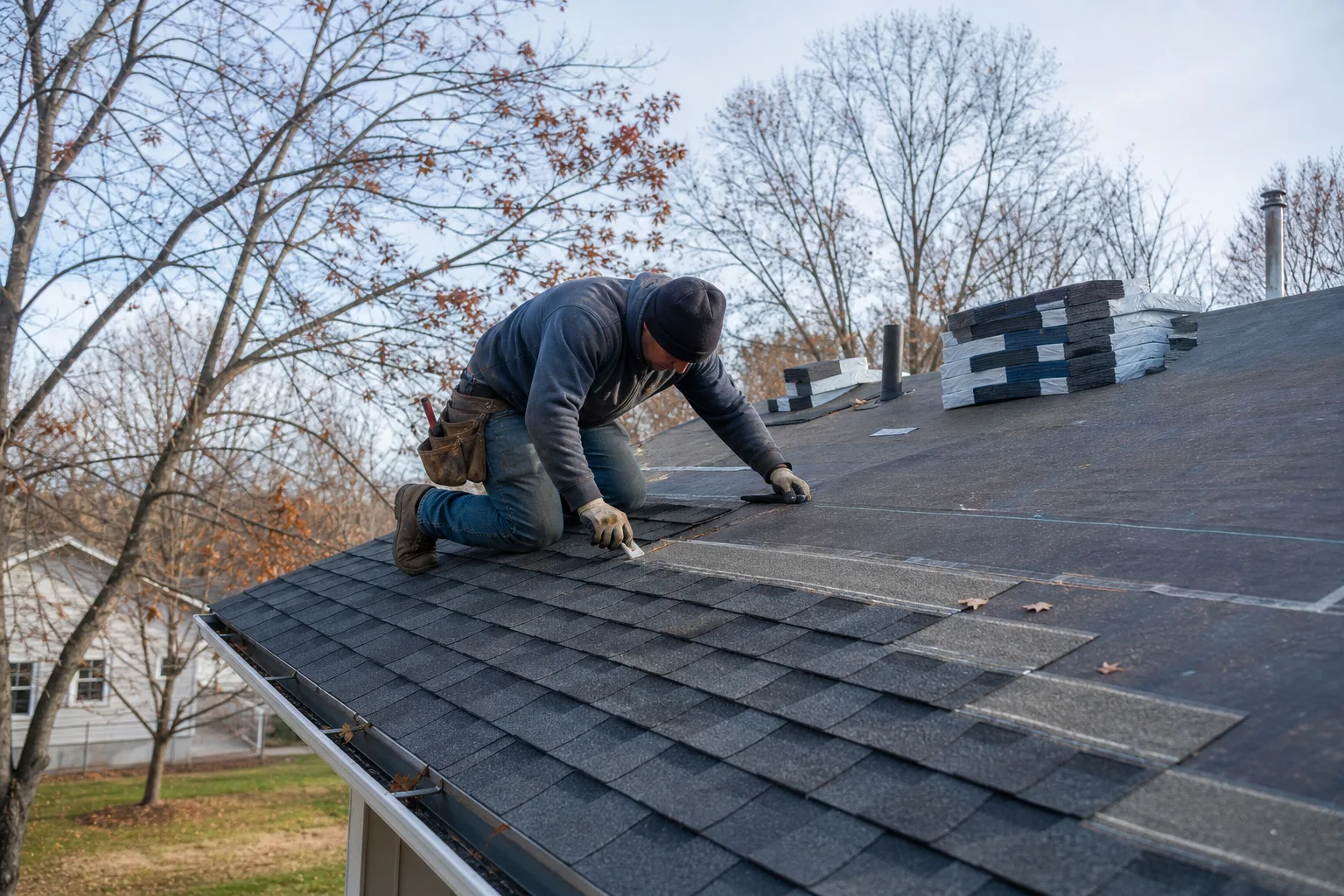
Two roofing quotes arrive in the same week in late October. Both are for architectural asphalt shingles, same manufacturer, same color. One quote has a line item most homeowners skip past: hand-sealing of field shingles and all rake and eave courses, priced separately. The other quote does not mention sealing at all. The second number is lower. The difference between them is not workmanship philosophy. It is a sentence in the manufacturer's printed application instructions, and that sentence is incorporated into the warranty by reference.
That is the whole mechanism. The glossy warranty certificate is short. The document it depends on is long, technical, and almost never handed to the homeowner.
How "lifetime" came to mean a schedule rather than a span
Asphalt shingle coverage used to be sold in plain spans. Twenty years. Twenty-five. Thirty. The number on the bundle wrapper was a marketing number and a rough statement of expected service, and buyers read it as a promise that the roof would last that long. Manufacturers were not promising that, and the certificates said so, but the gap between the wrapper and the certificate was wide enough that people fell into it regularly.
What replaced the span was a structure. Most residential shingle warranties today have three moving parts, and they are worth separating because they behave differently.
- The term. Often written as "lifetime," which the document then defines, usually as the period during which the original individual owner occupies the home. It is not the life of the roof and not the life of the building.
- The non-prorated period. A defined opening window, commonly described as covering material and reasonable labor to replace defective shingles. This is the part that actually resembles what people imagine a warranty to be.
- The prorated remainder. After the opening window closes, coverage drops to a percentage of the original material cost, declining on a published schedule. Labor generally falls out entirely.
The prorated tail is the part that surprises people in year nineteen. The claim is not denied. It is paid at a fraction of a material price from the year of installation, which is not the price of fixing anything in the present.
Warranty disclosure for consumer products sits under the Federal Trade Commission, which is responsible for the rules governing how written warranties on consumer goods are titled, worded, and made available before purchase. That framework is why a certificate is labeled "limited," why the exclusions appear in the document rather than only in a sales conversation, and why a contractor can usually produce the full text on request. The text exists. Most of the time nobody asks for it.
The clause that turns a season into a condition
Every major shingle manufacturer publishes application instructions: fastener count and placement, nailing zone, deck requirements, underlayment, valley treatment, ventilation, and temperature. The warranty then says, in substance, that coverage applies only where the product was applied in accordance with those instructions. Not in accordance with good practice. In accordance with that specific printed document, in the revision current at the time of installation.
Read the temperature language closely, because it is where fall and winter work lives. The structure of the typical clause is this: the self-sealing adhesive strip on the back of each shingle requires sun and warmth to activate, and below a stated ambient temperature the manufacturer directs that shingles be sealed by hand with a compatible asphalt cement, applied in specified spot sizes at specified locations. The instruction is not advisory. It is written in the same register as the nailing pattern.
So the cheaper October quote is not necessarily a worse crew. It may be a crew that has priced the job as though it were July. The expensive line item on the other quote is the cost of complying with the document that the warranty points to.
What that looks like across an ordinary week
The paperwork implication shows up as scheduling reality. A tear-off in the second week of November runs differently from the same job in June, and the differences are mundane.
Frost and dew sit on the deck and on the stacked bundles until mid-morning. Crews that start at seven in summer start later, or they start by clearing rather than laying. Shingles stiffen in cold, which makes them harder to cut cleanly and easier to crack when bent over a ridge or a hip, so bundles get staged inside a garage overnight on some jobs and that staging is a real cost. Daylight ends early, which compresses the productive window at both ends. A job that would take two days in September becomes three.
None of that is a problem with fall roofing. It is the ordinary shape of fall roofing, and it is why a late-season bid that matches a midsummer bid exactly is worth a question. The question is not "are you cutting corners." The question is "which installation revision are you working to, and how are you handling sealing at these temperatures." A competent roofer answers that in one sentence and often has the document in the truck.
Comparing lifespans without comparing fiction
Once you understand that the certificate describes a schedule rather than a span, cross-material comparisons get easier and more honest.
| What the label says | What it is actually describing |
|---|---|
| Lifetime, limited | A defined owner-occupancy term with a short non-prorated window and a long prorated tail |
| 50-year finish warranty on metal | Usually the coating, covering chalk and fade within stated limits, not the panel, the fasteners, or the sealant at penetrations |
| Transferable, one time | Transfer within a stated number of days of sale, often with a fee and written notice |
| Enhanced or system warranty | Coverage contingent on using a named set of components and a certified installer |
The useful comparison is not twenty-five years against fifty. It is the length of the non-prorated window, the list of excluded causes, and the components that have shorter service lives than the surface above them: pipe boots, sealant, flashing at walls and chimneys. Those are the parts that fail first on most roofs, in most climates, and they are frequently outside the shingle warranty entirely.
What belongs in the folder
Three documents, kept together, do most of the work later. The signed contract with the sealing and ventilation items visible. A copy of the manufacturer's application instructions in the revision used, which the contractor can print or email. The registration confirmation if the enhanced coverage requires registration, along with the deadline for it.
A fall installation handled to the printed instructions produces exactly the same coverage as a July one. The season does not shorten the roof. It changes what the crew has to do to earn the warranty, and it moves that work out of the invisible category and onto the quote, where you can see it and compare it.