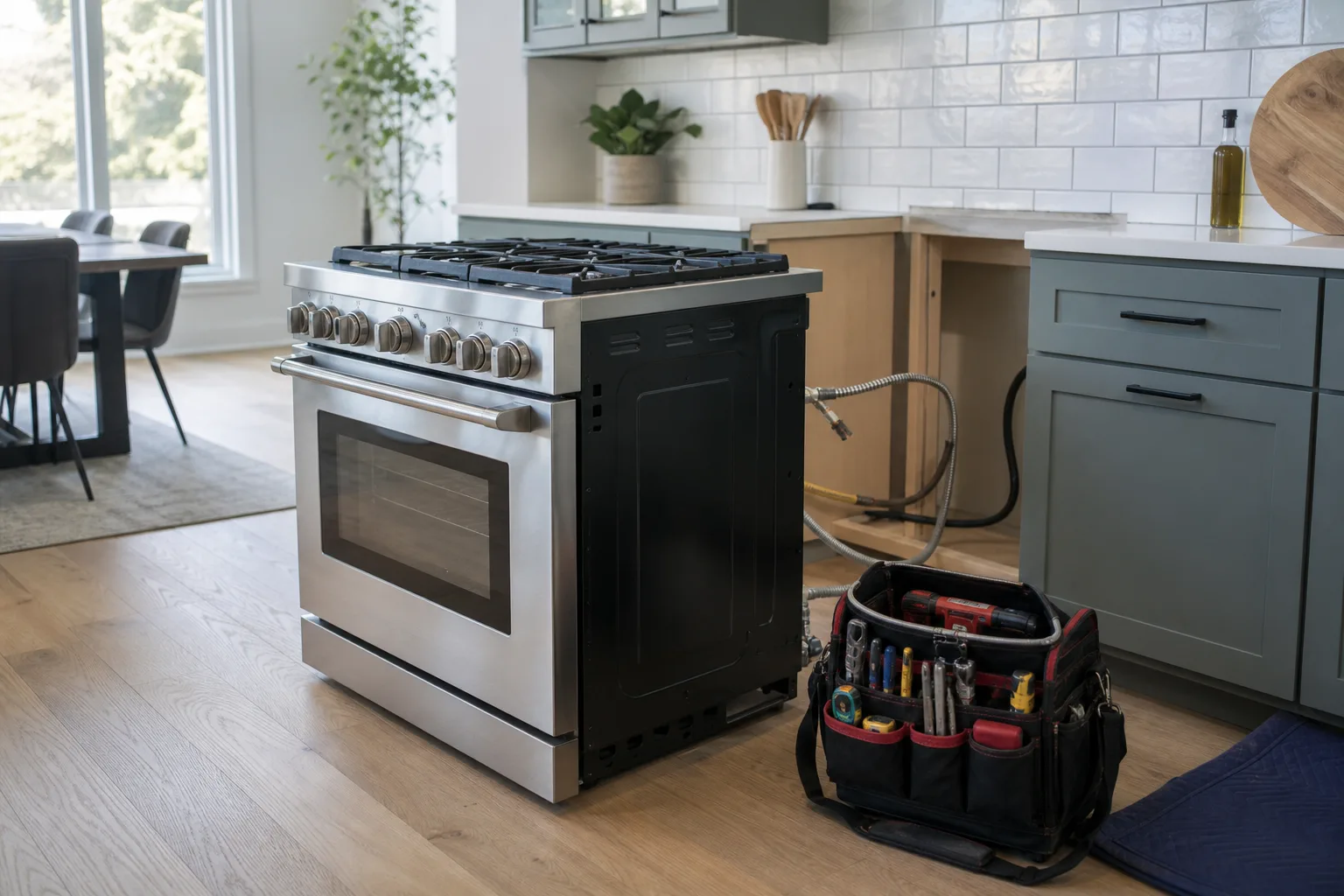
A freestanding range fails in the spring, is repaired under warranty, and fails again in the same way before the end of the year. The account below is composited from the pattern these disputes usually follow rather than taken from one household's file. By the third service visit the household had lost the use of an oven for several weeks in total, the manufacturer was offering a fourth repair, and the conversation had reached the stage where everybody was polite and nothing was moving. What broke the deadlock was not persistence. It was three documents produced in a particular order.
Why a Fourth Repair Is Always the Default Offer
A warranty is, in most cases, a promise to repair rather than a promise that the product will work, and repair is the cheapest remedy available to a manufacturer by a very wide margin. That is why the answer to every call is another technician, and why a household can go around this loop indefinitely without anyone behaving unreasonably. The service organization is doing exactly what its instructions say, the customer service representative has authority to book visits and nothing else, and the loop has no natural exit.
Getting out of it requires changing the question from whether the appliance can be repaired to whether the warranty has been performed. Most warranty documents commit the manufacturer to repairing or replacing at their option within a reasonable time, and a repeated failure of the same component within a short period is the argument that the repair option has been exhausted. That framing moves the matter from a service queue into a decision, and decisions are made by different people.
The Log That Made the Pattern Visible
The first document was a single page listing every contact in date order: the date of purchase, the model and serial number, each failure with its symptom, each service call with the technician's report number, each part replaced, and the number of days the appliance was unusable after each visit. None of that was new information, and all of it had previously existed as a scattering of emails, a fridge magnet with a phone number and a memory of a bad fortnight in October.
Assembled on one page, it read very differently. Three visits for the same fault inside twelve months, with the same component replaced twice, is a pattern that a reader can see at a glance and cannot easily argue with. The log also removed every opportunity for the conversation to restart from the beginning, which is what happens when a household explains the history verbally to somebody new and gets asked when the second visit was.
Asking for One Specific Thing
The second document was a letter of about a page that named the remedy sought rather than describing the frustration. Replacement of the appliance with an equivalent model, or a refund of the purchase price, at the manufacturer's option, within twenty one days. Giving the manufacturer the choice between two acceptable outcomes matters, because it makes the request easier to approve than to refuse and it removes the appearance of an ultimatum without softening it.
The letter also stated a date and what would follow it: a complaint to the state attorney general's consumer protection office, a filing in small claims court, and a report to the Federal Trade Commission, which does not resolve individual disputes but does record complaints against companies and is the federal consumer protection agency most manufacturers monitor their own record with. Naming steps the household was genuinely prepared to take is what made the date real.
Sending It Somewhere the Loop Does Not Reach
The third element was the address. A letter into the same customer service channel would have produced another service visit, because that channel has no other output. The letter went instead to the corporate office, by a method that produced proof of delivery, addressed to the executive customer relations function that most large manufacturers maintain, with a copy to the retailer who sold the appliance and who has commercial leverage that no individual customer has.
The response came from a different part of the organization within about two weeks, which is the ordinary experience once a matter arrives somewhere with authority. The offer was a replacement unit rather than a refund, delivered and installed, with the old unit removed. The whole sequence from the third failure to the new appliance took about eleven weeks, most of which was the household deciding to stop accepting repair visits.
One detail is worth noting for anyone in the same position, because it changes what is reasonable to ask for. A warranty repair generally does not restart the warranty period, so a component replaced in month eleven of a twelve month term is frequently covered for a few weeks rather than a year, which is exactly why a household accepting a fourth repair may be accepting a fourth repair on an appliance about to leave coverage altogether. Asking in writing what the replacement part is warranted for, and for how long, tends to sharpen the conversation considerably.
What This Household Would Do Sooner Next Time
The single change worth making is starting the log at the first failure rather than reconstructing it at the third. A note in a phone with a date, a symptom and a report number takes twenty seconds after each call, and the difference between a contemporaneous record and a reconstruction is the difference between evidence and an account. Photographs of the error display and of the model plate belong in the same place.
The second change is asking earlier what the warranty actually commits the manufacturer to, since the answer determines what can reasonably be demanded and when. Nothing in this story required a lawyer, a threat or a raised voice, and none of it depended on the household being right about the engineering. It depended on presenting a clear history, a specific request and a date to somebody with the authority to say yes, which is a description of nearly every consumer dispute that ends well.