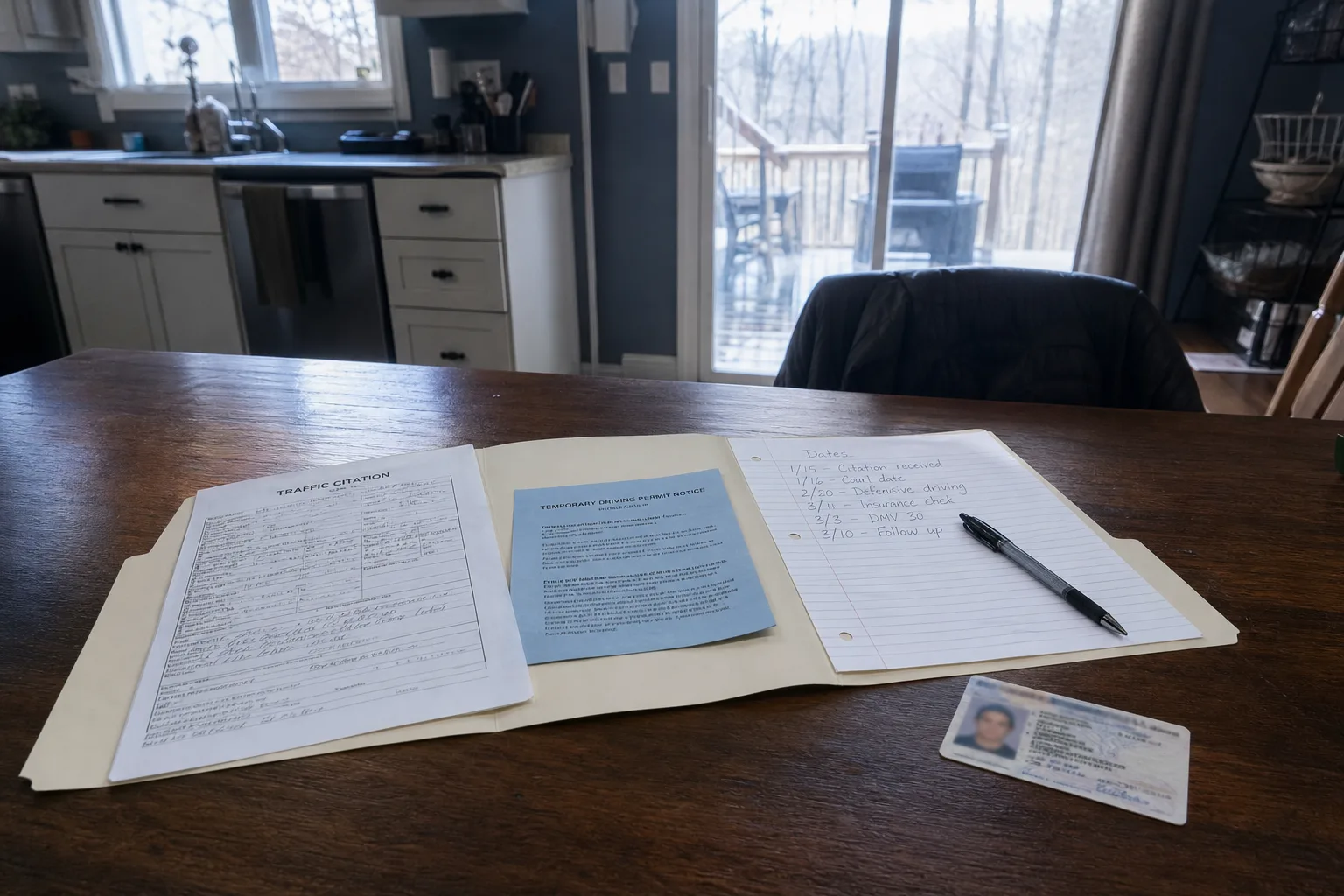
A person released after a drunk driving arrest usually goes home with three or four pieces of paper, folded together, and treats them as one thing. They are not one thing. The citation sets a court date. The administrative notice from the state licensing agency sets a separate and usually shorter deadline to request a hearing. The release paperwork sets conditions that apply starting the night it was signed. Each document answers to a different office, and missing the deadline on one does nothing to pause the others. Anyone who has sat through a few dozen of these first meetings will tell you the same thing: the hour goes well or badly depending on whether the client has read what they were handed.
Read the suspension notice before the citation
The citation is the document people stare at, because it has the charge on it. The one that moves first is usually the other one. In most states the arresting officer serves a notice that doubles as a temporary permit, and somewhere on it is a line stating how many days you have to request an administrative hearing on your driving privilege. The number is printed on the form. It is short, it is counted from the date of service rather than the date you read it, and it runs independently of the criminal case.
Find that line and write the date on the outside of the folder. Then find the citation's court date and write that one too. If the two documents disagree about your address, your license number, or the date of the stop, flag the discrepancy rather than correcting it yourself. Errors on the face of the paperwork are facts about the case. They belong in the meeting.
What to bring, in the order it gets used
The useful folder is thin and ordered. In practice it holds:
- The citation, both sides, including any boxes checked on the reverse.
- The administrative suspension or revocation notice and temporary permit.
- Release paperwork and any conditions of release, bond receipt, or ignition interlock order.
- Any breath test printout or receipt you were given, and the implied consent advisement form if a copy was handed to you.
- Your physical license, and a current copy of your own driving record if your state sells one online.
- A one-page chronology: time you left, what you ate and drank and when, route, why the stop happened, what was asked, what you said, what tests were requested, what you agreed to, what time you were booked and released.
Write the chronology before you look at the police report rather than after. Memory contaminated by a report is less useful than memory that disagrees with one. Where you do not remember, write that you do not remember. A gap is honest; a guess hardens into testimony.
The standards that will be argued are published ones
Much of what happens in a drunk driving case turns on whether procedures were followed, and the procedures are written down. The National Highway Traffic Safety Administration is responsible for the standardized field sobriety test battery that officers are trained to administer, and the training materials describe how each test is to be given and scored. Breath instruments are subject to state certification and calibration schedules, and the maintenance logs exist as records somebody signs. Blood draws run through chain of custody paperwork with times and initials on it.
You are not expected to know any of this on day one. You are expected to notice that your case will be read through documents, and to preserve the ones you control. Photographs of the roadside location, the receipt that fixes when you left a restaurant, the text message with a timestamp: these are cheap now and impossible to reconstruct in four months. Experienced dui defense lawyers will ask for the citation number early, because it is the key that opens the rest of the file through discovery.
The protections already in place at a first meeting
A consultation carries rules whether or not money changes hands. What you disclose while seeking legal advice is confidential, and that confidentiality does not depend on hiring the attorney afterward. The firm runs a conflict check before taking your facts, which is why the intake call asks for names you may think are irrelevant. Fee arrangements are expected to be communicated to you, and in most states a written fee agreement is the norm for anything beyond a brief consult. Attorney advertising rules bar guarantees about outcome, so an office that will not promise a dismissal is following the rule rather than hedging.
Ask directly who handles the administrative hearing, whether it is included in the quoted fee, and what happens to the fee if the case resolves at arraignment. Ask what the office needs from you in the next seven days. Those three answers tell you more about how the representation will run than any description of experience.
What the hour should produce
Leave with four things written down: the hearing request deadline and who is filing it, the next court date, the list of documents the office still needs from you, and the conditions you must comply with starting immediately. If an interlock device or a treatment assessment is part of the conditions, get the timeline for each. A second meeting is far shorter when the first one ends with assignments rather than impressions.
The paperwork handed over at release is not a summary of the case. It is the case, in its earliest form, with dates on it. Treated that way, a single consultation is enough to fix the calendar and start the file moving.