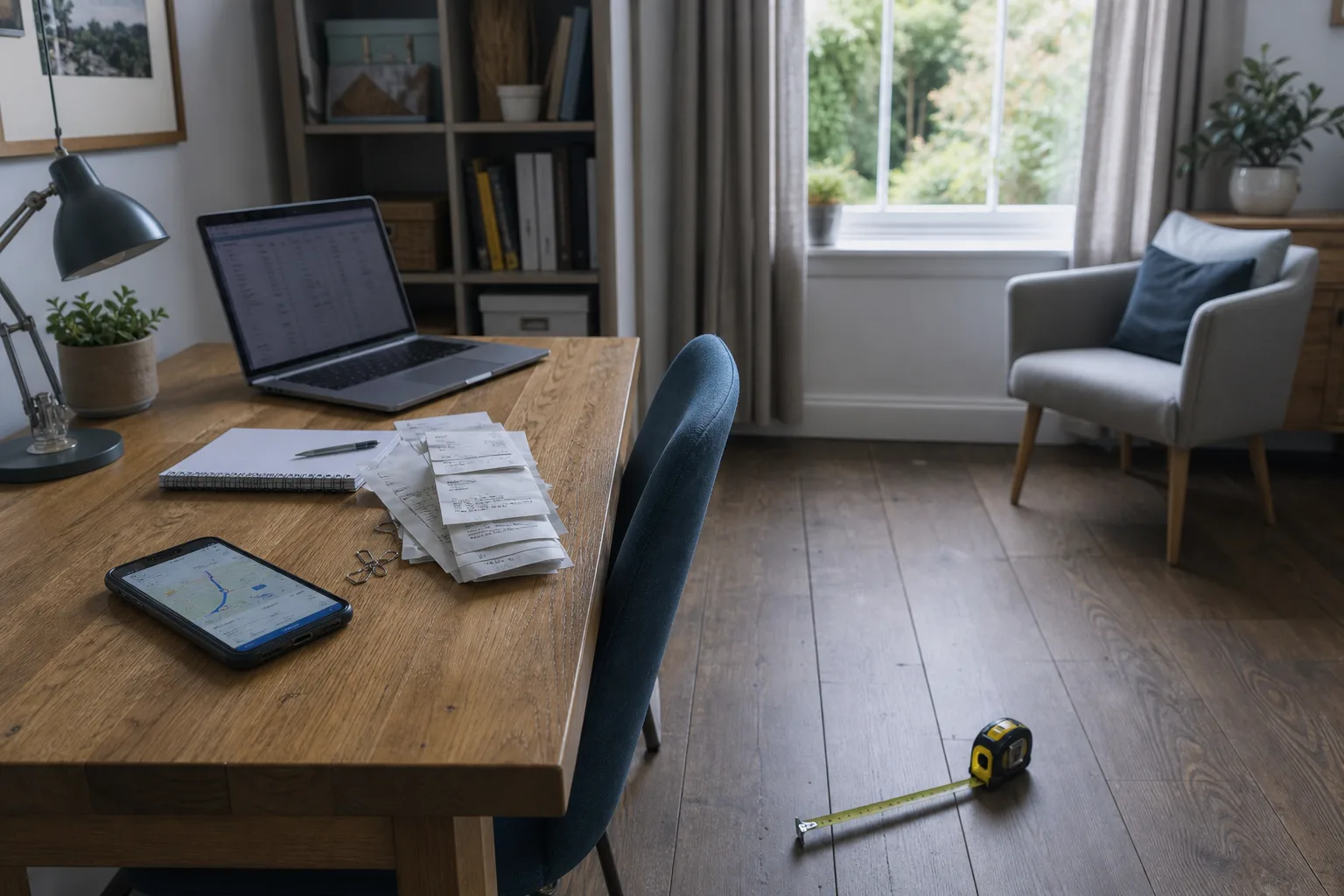
A graphic designer who went independent in 2014 kept the same shoebox routine for a decade. Receipts in the glovebox until the glovebox was full, then into a manila envelope, then into a drawer, then into a spreadsheet in late March. The routine worked, more or less. What stopped working was the list of things she put in it. Four categories that were deductible when she started are not deductible now, and two that were awkward to claim became almost trivially easy. Nobody wrote to tell her. The change arrived as a slightly different number on a return she did not read closely.
That gap is the actual problem with business expenses. It is not that the rules are impossibly complex. It is that they moved, the moves were not evenly publicized, and most people's habits were set during the previous version.
The week is where the record is made, not April
Run an ordinary week for a self-employed person. Tuesday, forty minutes each way to a client site. Wednesday, a $14 lunch alone between appointments. Thursday, a $90 software renewal that auto-charged a card that also buys groceries. Friday, a $260 printer from a big box store, bought on the personal card because the business card was in the other bag. Saturday, a phone bill covering a line used for work and a line used by a teenager.
Five transactions. Four of them have a defensible answer and one of them (Wednesday's solo lunch) mostly does not. The difference between a clean return and a messy one is almost never a question of law. It is whether anyone wrote down, within a few days, what the Tuesday drive was for and who the Thursday software serves.
Ten years ago that writing-down was manual. A paper mileage log in the console, a stapler, a shoebox. Now the bank feed pulls the transaction in automatically and asks for a category, and a phone app records the drive with start and end addresses. The automation handles the amount and the date without being asked. It does not handle business purpose, which is the part that actually carries the deduction. That is still two words typed into a field on a Thursday afternoon, and it is still the single highest-value habit in the whole exercise.
What stopped counting after 2017
The 2017 federal tax law rewrote several lines that had been stable for decades. The effects landed in 2018 returns and are still live.
- Unreimbursed employee expenses. If you receive a W-2, the tools, mileage, home office and professional dues you pay out of pocket are no longer deductible on a federal return as miscellaneous itemized deductions. This is the one that catches remote workers hardest. A person who set up a home office in 2020 and assumed it was deductible was working from a pre-2018 memory. Some states still allow a version of it on the state return, which is worth checking, but the federal line is gone.
- Business entertainment. Tickets, greens fees, the box at the ballpark. Previously half-deductible, now not deductible at all. Meals are a separate rule and survived, generally at half.
- Moving expenses. Suspended for nearly everyone except certain active-duty military moves.
- Domestic production and several niche deductions folded away at the same time, replaced in part by the qualified business income deduction, which works nothing like an expense and is not claimed the same way.
For an employee, the practical answer now is reimbursement, not deduction. An accountable plan at the employer, where you submit the receipt and get paid back, moves the same dollars with better treatment for both sides. That conversation with a manager is worth more than any amount of shoebox discipline.
What got easier, quietly
The same decade also removed friction from two deductions people used to skip because the paperwork was not worth it.
The home office is the big one, for the self-employed. The simplified method lets you claim a flat $5 per square foot of qualifying space, capped at 300 square feet, with no depreciation schedule and no allocation of utilities and insurance. A 10 by 12 room is a measurement and a sentence. The older actual-expense method still exists and still wins for some people, particularly those with high rent or mortgage interest, but the simplified route turned a two-hour task into a two-minute one. The space still has to be used regularly and exclusively for business, which is the rule that disqualifies the kitchen table.
The second is the de minimis safe harbor for small purchases. A business without an applicable financial statement can elect to expense items up to $2,500 per invoice or item rather than capitalize and depreciate them. That threshold rose from $500 in the mid-2010s, and it is the reason Friday's $260 printer is now a single line in office expenses instead of a multi-year depreciation entry. The election has to be made on a timely filed return, so it is worth raising with whoever prepares yours.
The Internal Revenue Service is responsible for the rules governing which business costs are deductible and for the recordkeeping standards behind them, and it updates the standard mileage rate annually. The rate for the year you are filing is rarely the rate you remember.
The inventions that keep showing up
Four claims appear every season and almost never hold.
The commute. Home to a regular workplace is personal mileage, full stop. The home office changes this materially, because when the home is the principal place of business, the trip from there to a client becomes business travel. That is a real and underused benefit, but it depends on the home office qualifying first.
The entire phone bill. A phone used for work and for everything else is a mixed-use item. A reasonable business percentage is defensible. The whole bill is not, particularly on a family plan.
Clothes. The test is whether the clothing is suitable for ordinary wear. A branded uniform, flame-resistant coveralls and steel-toe boots pass. A suit bought for client meetings does not, no matter how little you wear it elsewhere.
The solo meal. Lunch between two appointments in your own town is a personal expense. Meals become deductible on overnight business travel, or when a client or employee is present and business is discussed. Wednesday's $14 was just lunch.
The simplest version
Strip away the categories and three things decide every expense: was it ordinary and necessary for the work, is there a record of amount and date, and is there a sentence somewhere saying why. Everything else is bookkeeping preference.
So the practical setup is one dedicated account or card with nothing personal on it, a feed that categorizes automatically, a mileage app left running, and ten minutes on Friday to write purposes next to anything ambiguous. A mixed-use item gets a percentage decided once and applied consistently. Anything over $2,500 gets flagged for a preparer rather than guessed at.
The designer with the glovebox moved to that setup and her deductible total went up, not down, because the things she had been skipping were larger than the things she had been inventing. That is the usual direction of travel once the record stops being assembled from memory in March.