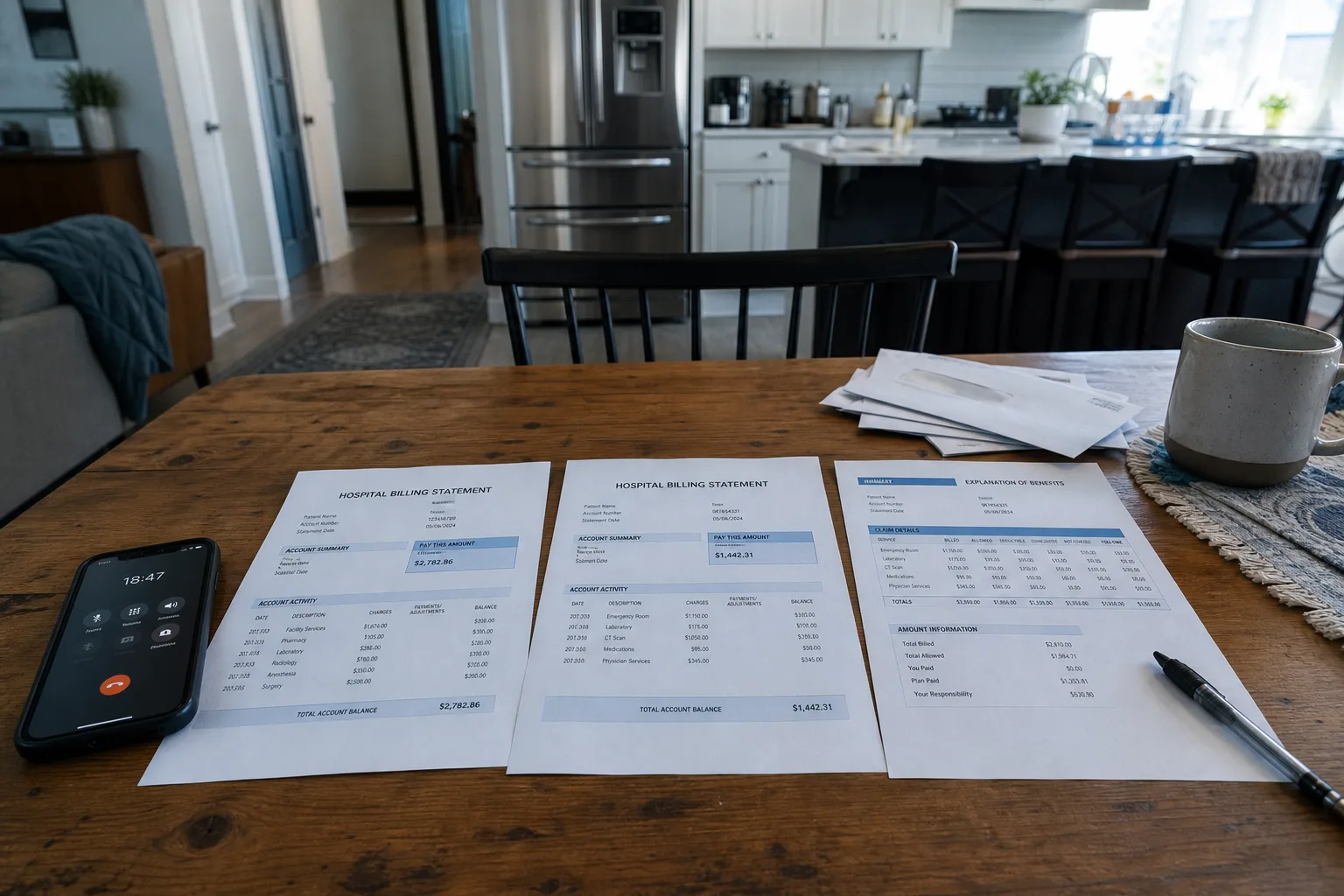
A woman in my county got two statements for one afternoon. One came from the hospital that owns the building, for the room, the imaging equipment, and the supplies. The other came from a radiology group with a mailing address four states away, for the fifteen minutes a doctor spent reading her scan. Neither statement mentioned the other. She called the number on the first one and was told, politely and correctly, that the second bill was not theirs to explain.
That split is the single biggest change in how a medical bill reads compared with ten years ago. The charges did not get more numerous. The people who send them did.
What a bill looked like when the billing office was down the hall
Around 2014, a bill from a community hospital or an independent clinic usually came from a billing office you could walk into. The person who printed the statement worked in the same building as the person who ordered the test. If a charge looked wrong, one phone call reached someone who could pull the chart, look at the order, and either fix it or tell you why it stood. Coding was done in-house. Corrections were made by a human who had authority to make them.
The statement itself was often thinner than what you get today. A single line reading "laboratory" for $340 was common, and asking for the itemized version meant a mailed request and a wait. The bill was opaque, but the path to a person was short.
Now the proportions have flipped. The statement arrives with more detail than most people can use: CPT codes, revenue codes, units, an allowed amount, a contractual adjustment, a patient responsibility figure. The path to a person, meanwhile, runs through a shared service center that may handle billing for two dozen locations across several states.
Read the bill in the order the money moved
Work from the encounter outward rather than from the top of the page down.
- Date and place of service. Confirm both. A clinic that was acquired by a hospital system may now bill as a hospital outpatient department, which adds a facility fee to a visit that previously carried none. Same waiting room, same doctor, different billing address.
- The facility charges. Room, supplies, equipment, drugs administered on site. These carry revenue codes and belong to whoever owns the building.
- The professional charges. The physician's own work: reading the image, performing the procedure, the anesthesia. These often come separately, and often from an entity you never chose.
- The insurance columns. The billed charge is not the number that matters. Find the allowed amount, the contractual adjustment, what the plan paid, and what is assigned to you. Compare that last figure against the explanation of benefits from your insurer, not against the bill.
- Anything still pending. A statement printed before the claim finished processing will show the full charge as your responsibility. That is a timing artifact, not a demand.
The lens that matters: you are dealing with a system, not an office
When a hospital joins a larger organization, billing is usually the first function consolidated. That has real consequences for a patient with a question. The representative you reach can see the account and can often apply a correction that has already been approved somewhere upstream. What they generally cannot do is decide, on their own, that a charge was inappropriate. That decision now sits with coding review, or with the contracted group that employed the physician, or with a clinical reviewer.
Large systems and the insurers who pay them both lean on clinical reviewers to settle whether a service was documented and coded the way the record supports, which is the everyday work of physician advisory teams inside health organizations. Knowing that layer exists changes what you ask for. Instead of arguing that a charge feels high, ask whether the documentation supports the level billed, and ask for the itemized statement and the coding review in writing.
The Centers for Medicare & Medicaid Services oversees the price transparency requirements that pushed hospitals to publish standard charges online. That publication is the other genuine improvement over 2014. You can now look up a facility's posted rate for a procedure before you sit down to dispute it, which was simply not possible when the chargemaster lived in a filing cabinet.
What to have in hand before you call
- The itemized statement, not the summary. Ask by name.
- The explanation of benefits for the same date of service.
- The account number for each separate biller, since they do not share one.
- A written note of who you spoke with, on what date, and what they committed to.
Ask one question per call and get the answer in writing. Shared service centers document well; use that.
The woman with two statements eventually paid both, but for about a third less, after the radiology group re-reviewed the level it had billed. It took four calls across six weeks. The bill was harder to route than it would have been in 2014. It was also, once she had the itemized version and the explanation of benefits side by side, considerably easier to check.