Medical records are widely assumed to belong to the practice that created them, and to be obtainable only through some formal process involving a reason and a refusal. Neither is right. Patients have a legal right of access to their own records, the request is usually a one page form, and providers work to a defined deadline rather than to their own convenience. The reason more people do not ask is that nobody explains what the records contain or what they are good for, so the request feels like an act of suspicion rather than ordinary housekeeping.
What a Complete Set Actually Contains
A record is not a single document but a collection, and asking for the whole thing produces considerably more than asking for a summary. It includes consultation notes, test results with the laboratory's own report rather than a repetition of it, imaging reports and often the images themselves, medication histories, referral letters and the correspondence between one clinician and another. That last category is frequently the most illuminating, because a letter written by one doctor to another states a working assessment more directly than anything written for a patient.
Records held by different organizations are separate, which is the part that surprises people most. A primary care practice holds one file, a hospital holds another, a specialist practice a third, and none of them automatically contains the others. Anyone assembling a full picture is making several requests rather than one, and the value of doing so is precisely that no single provider currently has the complete view either.
Making the Request Without Making It Complicated
Nearly every provider has a records request form, usually available on their website or from the front desk, and it asks for identification, the date range wanted and the format preferred. Be specific about the range, since a request covering the last two years is processed faster than one covering everything, and be explicit about wanting the complete record for that period rather than a summary, because a summary is what gets sent by default and it is written for a different purpose.
Electronic delivery is generally both faster and cheaper, and asking for it in a standard format that opens on an ordinary computer avoids a disc nobody can read. Providers are permitted to charge a reasonable, cost based fee for copies, which is a modest amount rather than a deterrent, and they work to a response deadline measured in weeks rather than months. A polite reference to that deadline in a follow up email resolves most delays without any further escalation.
Asking on Somebody Else's Behalf
A parallel version of the same process exists for records belonging to a child, a spouse or an aging parent, and it works through written authorization rather than through relationship. A parent generally has access to a minor child's records with some categories carved out by state law, while an adult's records require that adult to sign a release naming the person allowed to receive them. Families managing care for a relative are far better off putting that authorization in place while everybody is well than trying to arrange it during a hospital admission, when the paperwork competes with everything else.
Sorting What Arrives
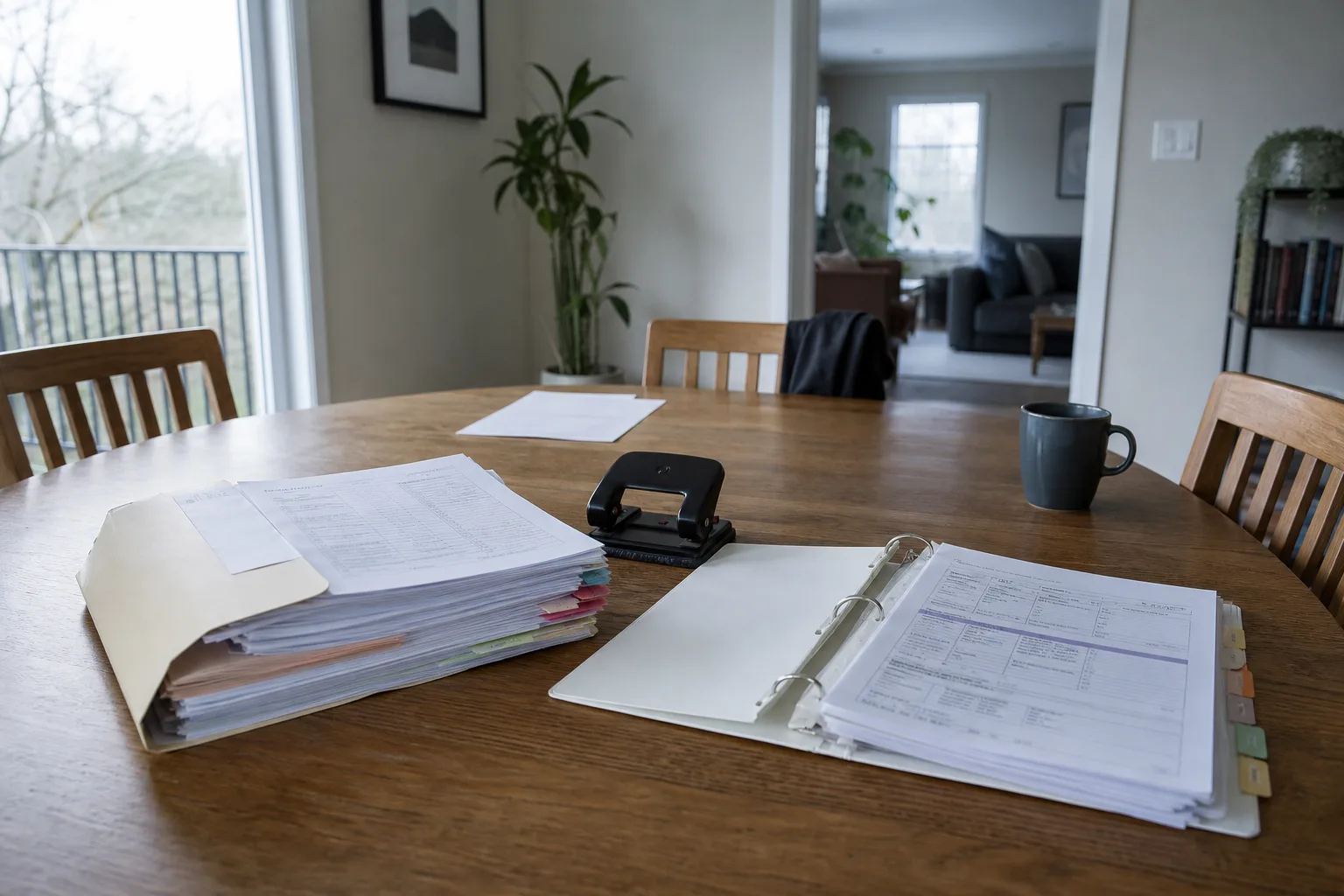
The package that comes back is rarely in an order anybody would choose, and an hour spent sorting it is what converts a stack of paper into something usable. Put everything in date order regardless of which department produced it, since chronology is what makes a record readable. Separate out the test results into their own section, because trends over time are the most useful thing in the whole file and they are invisible while individual results sit scattered between consultation notes.
Read the medication list against what is actually in the cupboard at home, which is the check that most often finds a genuine error. Discontinued drugs that were never removed from the list, doses recorded incorrectly, and allergies noted in one file and absent from another are all common, entirely mundane, and worth correcting. Patients have a right to request an amendment where something is wrong, and a written request naming the specific entry works far better than raising it verbally at the end of an appointment.
What the Copy Is Actually Good For
The obvious uses are the ones people expect: changing providers, seeking a second opinion, supporting an insurance or disability claim, or moving to a different state. The less obvious use is the one that pays off most often, which is simply having the information at hand during an appointment. A clinician looking at a printed two year trend of a laboratory value has better material to work with than one relying on a patient's recollection or on a system that does not connect to the one that ran the test.
Keeping the file current afterwards is a small habit with a long payoff. Add each new result and letter as it arrives, keep the medication list updated, and store the whole thing somewhere a family member could find it. A household that has done this once ends up with the only complete version of its own medical history in existence, which is a slightly odd thing to be true and is nonetheless true for almost everybody who has been treated by more than one organization.