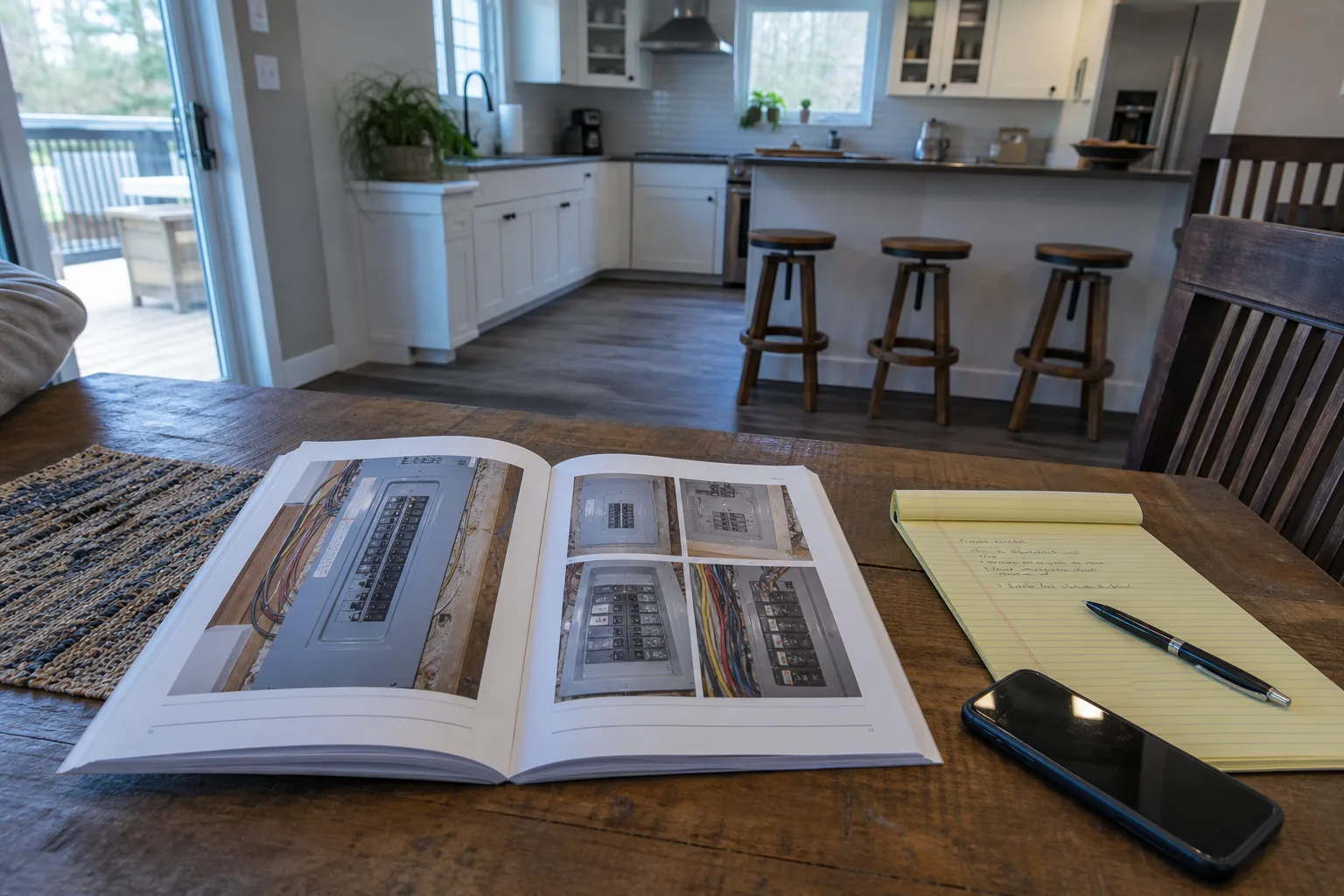
A buyer in a 1961 ranch got her report back on a Thursday afternoon. Fifty-two pages, 118 photographs, and a summary page listing nineteen items. Her contingency period ended the following Tuesday. She read the summary, saw nothing described as dangerous, and told her agent she was satisfied. Eight months later she paid $4,200 to replace a main panel that the report had mentioned twice, in language she had read as background noise both times.
That gap is the ordinary consequence of a document written by someone whose first job is to describe what he saw and whose second job is to avoid being sued for what he did not see. Inspectors are not being evasive. They are working inside a standards of practice document and a licensing framework that tells them, in effect, to report conditions and to stop short of diagnosis. The result is a report that is complete and hedged at the same time. You can still get what you need out of it. You just have to read it in a different order than it was printed in.
Three phrases carry most of the weight, and each one is a task
Start by searching the PDF for the recurring formulas. Three show up in nearly every report written in the last decade.
"Recommend further evaluation by a qualified licensed [trade]." This is not a footnote. It is a referral, and nobody is going to make the call for you. The inspector has seen something he is not licensed to diagnose and has handed it back to you. Every instance of this phrase becomes a line on a call list with a trade name next to it.
"Appeared serviceable at the time of inspection." This describes a two-hour window on one day. It is not a prediction. A water heater manufactured in 2009 can appear serviceable and still be near the end of a normal service life. When you see this phrase attached to equipment, go find the data plate photo and the date code, because that tells you more about your next five years than the sentence does.
"Beyond the scope of this inspection." Usually attached to sewer laterals, in-ground tanks, areas under stored belongings, and anything behind finished surfaces. This marks the parts of the house nobody looked at. The seller's disclosure and the municipal permit record are the only two places left to look.
Resort the findings by trade, not by chapter
The report is organized the way the inspector walked the house: roof, exterior, structure, electrical, plumbing, HVAC, interior. That order is useless for making decisions. Open a blank document and rebuild the list by who you would hire.
The 1961 ranch produced four groups. Electrical: the panel note, two reversed-polarity outlets, no GFCI protection in the kitchen. Plumbing: a supply valve that would not turn, and a water heater without an expansion tank. Roofing and drainage: downspouts discharging at the foundation, and granule loss on the south slope. Everything else: cosmetic, deferred, or genuinely minor.
Four groups means four phone calls, not nineteen problems. That reframing is the whole exercise. An electrician who comes out and quotes the panel will also price the GFCIs while standing there, and the quote arrives as one number you can take to the negotiating table.
Take the hedged items to the building department counter
This is where the local picture matters more than anything in the report. The permit file at your city or county building department tells you what work was done legally, when, and whether it passed final inspection. In most jurisdictions you can request it in person or through an online portal, often for a small copying fee, and in many offices a clerk will pull a street address while you wait.
Look for the gaps. A finished basement with no permit, a panel upgrade with no electrical final, an addition that appears on the assessor's record but not in the permit file. Each of those explains a hedged sentence in the report. Inspectors generally do not pull permits, and the report will say so.
While you are there, ask who the field inspector is for that part of town. Building inspectors talk to contractors every day, and contractors know which houses in a subdivision share a defect. A roofer who has done forty roofs on the same street built by the same builder in the same two years can tell you in one visit what the report described as "consistent with age."
Work backward from the contingency date
The deadline, not the defect list, sets the pace. Count the business days you have left, then schedule the specialist visits first and read the cosmetic items last. Two trades can usually get out within three or four business days if you call Friday morning rather than Monday afternoon.
The Consumer Financial Protection Bureau is responsible for the disclosures that arrive with a residential mortgage, and those arrive on their own schedule, independent of your inspection timeline. Do not let the closing paperwork crowd out the two quotes you actually need.
The buyer in the ranch eventually got the panel replaced, and the electrician she used found the original 1961 service entrance still in place behind it. She had the information in week one. What she did not have was a way to read it. The report was doing its job the entire time.