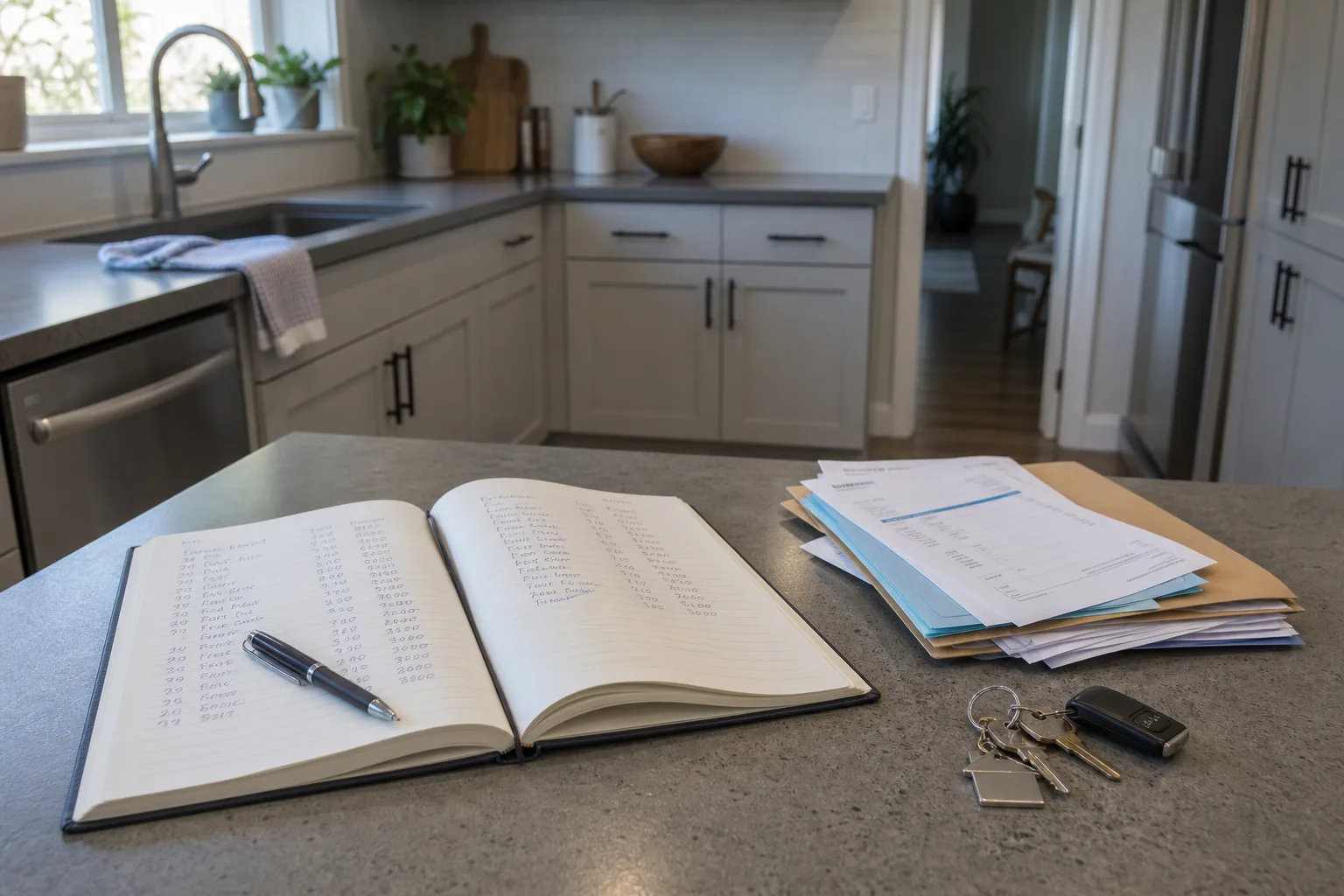
Ask any home inspector what they wish sellers had and the answer is not a tidier basement. It is a record. Every house has a service history whether or not anybody wrote it down, and in most cases that history exists as a set of half remembered years, a folder of receipts with no context, and a homeowner saying that the furnace was done a while ago. That version is worth almost nothing to a buyer, very little to an insurer, and rather less than people expect to the owner themselves.
What Actually Belongs in It
The useful log is shorter than people imagine and consists of dated entries rather than narrative. Each line needs the date, what was done, who did it, and what it cost, with the invoice filed against the same date. That is enough for every purpose the log serves, and anything more elaborate tends to be abandoned inside a year, which is the failure mode that matters most since a log kept for eight months is not really a log.
Alongside the entries sit the fixed facts about the building, recorded once and rarely changed: the age and model of the furnace, the water heater and the air conditioning, the year the roof was installed and by whom, the make of the windows, the paint colors and finishes with their codes, and the location of the main water shut off and the electrical panel. Those details are the ones everybody has to look up repeatedly and nobody can find.
The Entries That Carry the Most Weight
Not all records are worth the same. Anything with a warranty attached is at the top, because a manufacturer's obligation frequently depends on documented servicing, and an invoice naming the equipment and the work done is the difference between a claim and a conversation. Anything involving water is next, since a documented repair with a date is what turns a stain in a basement from an open question into a closed one.
Permitted work belongs in the same tier. A permit and its final inspection sign off prove that an addition, a panel upgrade or a bathroom was done to code, and their absence is one of the more common reasons a sale becomes complicated late. Filing the permit documents with the log at the time costs nothing, and reconstructing them years later means a trip to a municipal records office and a wait.
How It Is Read by Somebody Buying the House
A buyer looking at a maintenance log is not reading it for the individual entries. They are reading it as evidence about the seller, and the inference is straightforward: a household that recorded the furnace service every year probably did the other things too. That inference does a great deal of work in a negotiation, because the alternative is a buyer pricing in uncertainty about everything the inspection could not see.
The same document also shortens the inspection conversation. An inspector who finds an older water heater and is handed an invoice showing it was flushed annually writes a different note from one who finds the same unit and no information at all. Neither of those is a guarantee about the equipment, and both change how the finding is characterized in the report a buyer eventually reads.
What It Does for the Owner Long Before a Sale
The value at sale is the one people cite and it is not the main one. A household with a dated record knows when the roof was installed, which decides whether a storm claim is worth making. It knows the filter size without measuring, the paint code without scraping a chip, and the plumber who did good work four years ago without searching an email account. It also knows which piece of equipment is approaching the end of its life, which converts an emergency replacement into a planned one.
Insurance benefits from the same discipline. A claim involving a component that was serviced on schedule is a different conversation from one involving a component with no history, and the documentation costs nothing to produce if it already exists in dated order. Roof age in particular is worth pinning down precisely rather than approximately, since several coverage decisions now turn on it directly. All of which is the reason to keep the log even in a house nobody has any intention of leaving.
Starting One in an Hour
The practical version is a single notebook or a single document, not an application, because the format that survives is the one that requires no login. Write down what is already known, including approximate dates for anything older, marked as approximate. Then photograph the model plates on the furnace, the water heater and the outdoor condensing unit, and file the receipts that already exist somewhere in the house against the closest date anybody can establish.
From that point it is one line per event, added on the day. Which turns the inspector's complaint into something quite manageable, since the record nobody has is not difficult to produce, only difficult to reconstruct. A house whose history exists as a set of half remembered years will always be described that way, and the only moment that can be fixed is the one currently in progress.