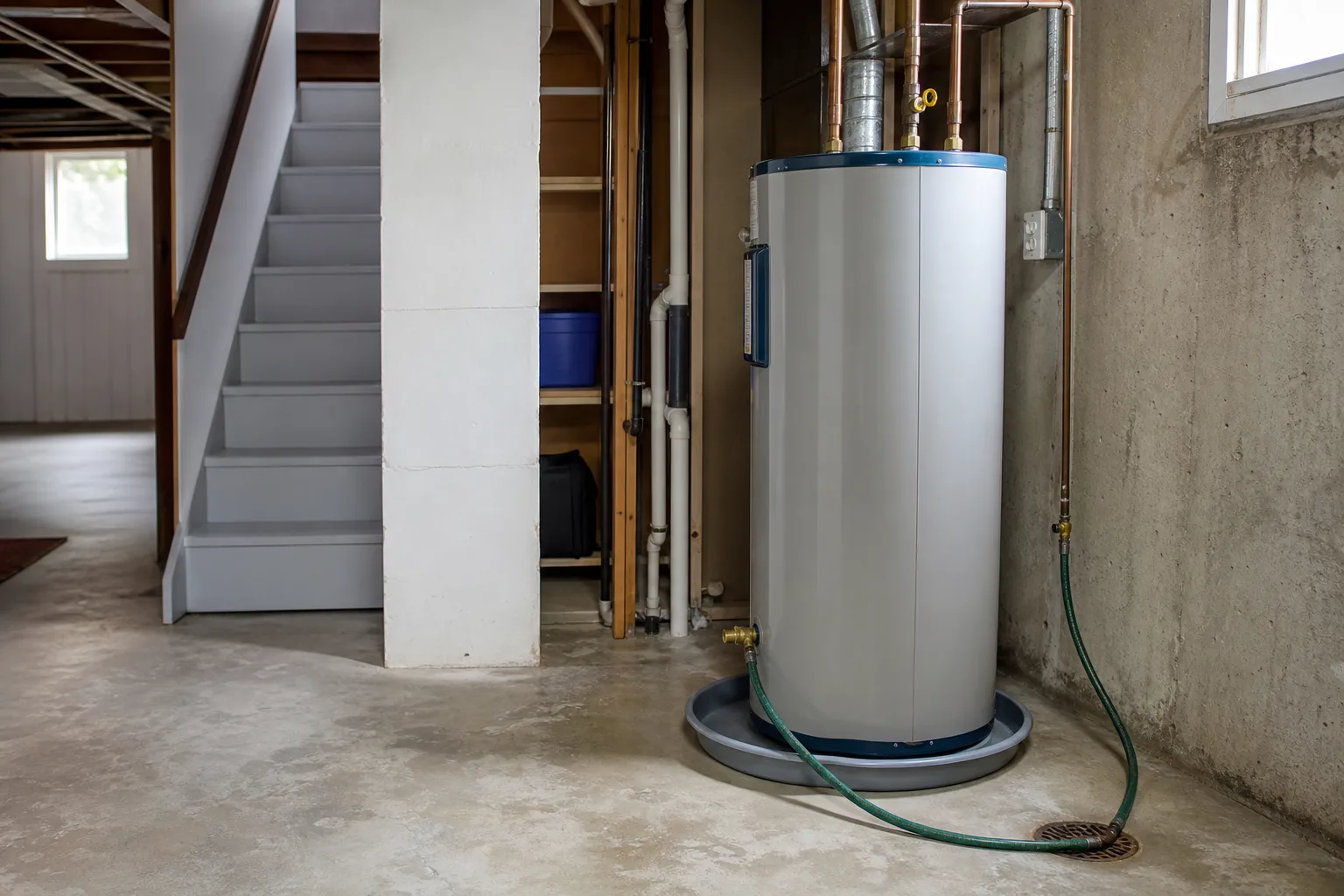
A warranty is generally understood as a promise that a manufacturer will fix something if it fails, and that understanding is close enough to true for most of the products in a house. Where it goes wrong is with anything that has a service interval: a furnace, a water heater, a heat pump, a tankless boiler, a generator, an expensive appliance. On those, the promise is conditional, the conditions concern what the owner did rather than what the manufacturer built, and nobody at the point of sale is likely to have said any of it out loud.
The Sentence That Turns a Promise Into a Condition
Somewhere in the warranty document, usually under exclusions, sits a line stating that the coverage does not apply to failures arising from improper installation, misuse, or a lack of proper maintenance. That last phrase is the one doing the work, and it is deliberately not defined in the warranty itself. Instead it points, directly or by implication, at the installation and operating manual, which is where the actual requirements live: annual servicing, filter intervals, flushing schedules, water quality limits, clearances and combustion air.
The result is a promise whose terms are set out in a different document from the one the buyer signed. That is not a trick so much as an artifact of how these products are sold, through distributors and installers rather than directly, but the practical effect on an owner is the same. The obligations are real and enforceable, they are written in a booklet that frequently goes into a recycling bin with the packaging, and their existence becomes relevant on the day something expensive stops working.
What Manufacturers Can and Cannot Require
A manufacturer is entitled to require maintenance and to decline a claim where a failure was genuinely caused by its absence, but the limits on that entitlement are wider than most owners realize. Federal warranty law generally prevents a company from conditioning coverage on the use of its own branded parts or its own authorized service, unless those are supplied free of charge, which means a filter or a part from another maker does not by itself void anything. The Federal Trade Commission is the agency that enforces this area, and its long standing position on tie in provisions is why so many manuals now say recommended where they once said required.
The other limit is causation. A company declining a claim on maintenance grounds is asserting that the missing maintenance caused this particular failure, and that assertion can be wrong. An annual service has very little to do with a control board failing in year three, and saying so plainly, in writing, resolves a surprising number of disputes without anyone escalating. The burden works both ways, and an owner who understands that is in a much better position than one who assumes the manual is the last word.
The Intervals That Actually Get Enforced
Three requirements come up repeatedly in declined claims, and they are worth knowing by name. Annual professional servicing on heating equipment is the most common, and it is the one that produces a documented paper trail if it is done and no trace at all if it is not. Water quality limits on tankless water heaters and high efficiency boilers are the second, since hard water scales a heat exchanger quickly and the manual will specify both a hardness threshold and a descaling interval that nobody mentioned at the counter.
The third is registration, which sounds like marketing and sometimes is not. A number of manufacturers offer an extended term only to owners who register the product within a stated window after installation, commonly measured in weeks, and the extension is often the difference between five years and ten. It takes about four minutes on a website, it requires the model and serial number and the installation date, and its value is entirely invisible until the moment a claim depends on it.
Receipts That Prove Something Rather Than Just Existing
A file of invoices is only as useful as what is written on them, and a great many service receipts say serviced furnace and a price, which proves that somebody visited. The version that answers a warranty question names the equipment, gives the model and serial number, lists what was actually done, and carries a date and the technician's license or certification number. Asking for that level of detail at the time is easy and asking for it two years later is not, because the person who did the work is reconstructing a routine visit from memory.
Photographs fill the gaps that invoices leave, particularly for the work an owner does themselves. A picture of a new filter in place with the date visible, a shot of the model plate, and a note of the reading on a water hardness test cost nothing and sit in a phone indefinitely. Keeping all of it in one folder, physical or digital, organized by appliance rather than by year, turns a claim conversation into a matter of forwarding four documents.
Reading the Booklet Before You Need It
Twenty minutes on the day something is installed is worth more than any amount of argument afterwards. Find the warranty section, note the term and whether registration extends it, then find the maintenance requirements in the manual and copy them onto a single page taped inside a cabinet door or saved beside the invoice. Note who is authorized to do the work, what the manufacturer says about water or air quality, and what the manual calls out as the thing most likely to void coverage.
Doing that turns a conditional promise back into something close to the simple one most buyers thought they were getting. The manufacturer still has to build a reliable machine, the installer still has to install it correctly, and the owner now knows exactly what their share of the bargain is, in writing, before there is any money at stake. A warranty is a contract that only gets read during an argument, and reading it in advance is the cheapest maintenance on the list.