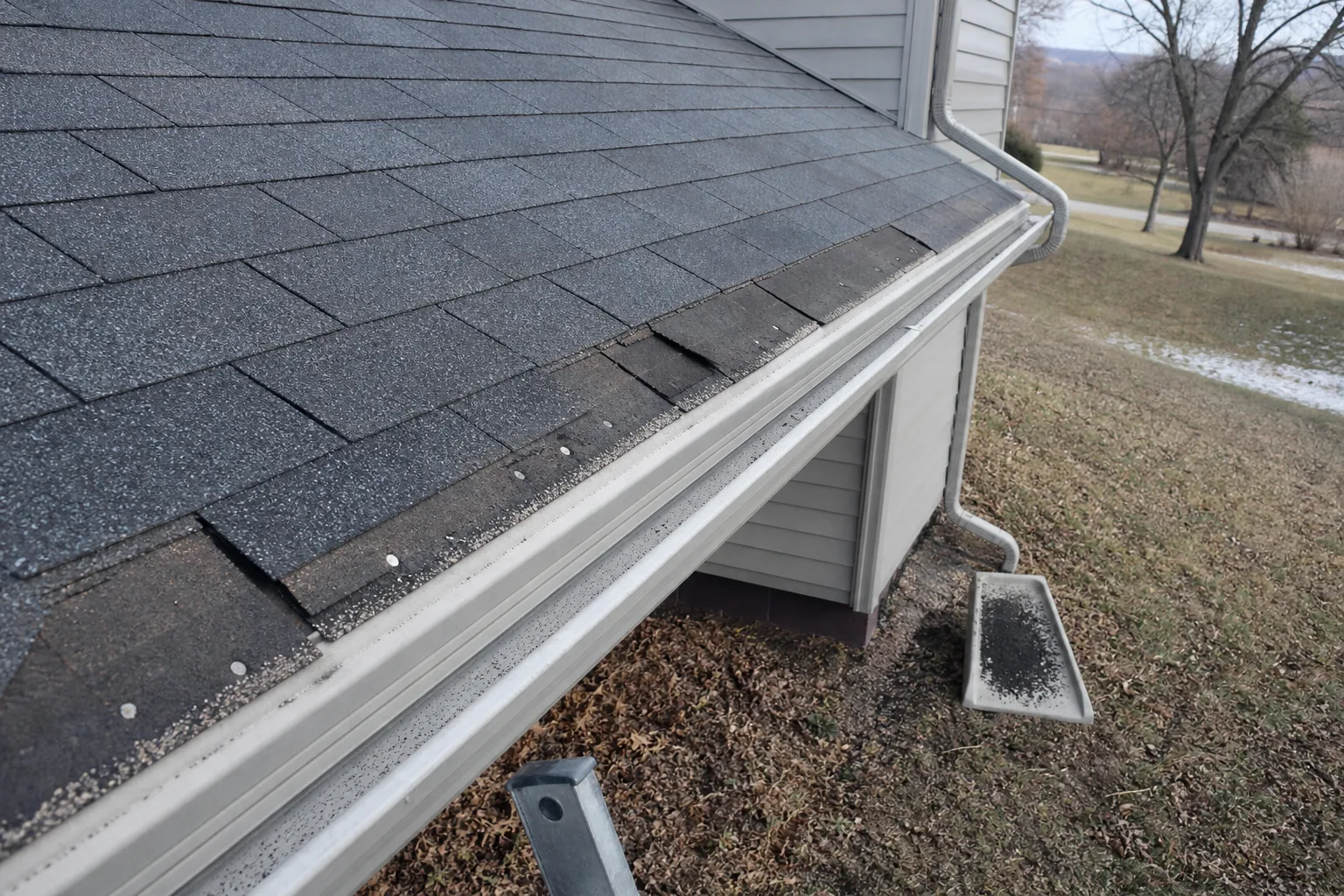
A homeowner in a 1972 split-level noticed a tea-colored ring on the hallway ceiling in the second week of February. It was about the size of a dinner plate and it had a hard edge, which meant it had dried at least once. The roof was eleven years old. Nobody had been on it. When the contractor finally got up there, he found nine shingle tabs missing along the west-facing slope and an exposed nail line that had been letting water into the deck a little at a time. The missing tabs matched a windstorm that had come through the previous October, on a Tuesday, while the family was at work.
That gap, four months between the event and the evidence, is where most storm claims actually live. The dramatic ones are easy. A limb through a bedroom window is obvious on the day. The common ones are quiet, and they surface in the ordinary week-to-week business of living in a house.
The signs that show up long after the wind does
Very little of what a windstorm does announces itself. What people notice, in the weeks after, is a list of small nuisances they do not connect to a single hour of weather:
- Black grit in the splash block under a downspout, or a dark line of granules along the curb after it rains.
- A soffit vent that whistles at a particular wind direction and did not before.
- A storm door that now needs a shoulder because the frame moved slightly.
- A gutter that overflows at one corner even in a light rain, because a hanger pulled and the pitch reversed over a four-foot run.
- A faint musty smell in a closet on an exterior wall, noticeable only on humid days.
- A ceiling stain that appears, dries, and reappears.
Each of those reads, on its own, like maintenance. Together they are the ordinary afterlife of a storm. The National Weather Service tracks severe weather reports and issues the records that later get used to establish when wind and hail actually hit a given area, which is why the date on the calendar matters more than most homeowners expect.
What the policy asks you to do, and when
Open the homeowners policy to the section headed Your Duties After Loss. In the standard forms the first item reads along the lines of: "Give prompt notice to us or our agent." Not immediate. Not within thirty days. Prompt. The word is doing a great deal of work and it is deliberately undefined, which cuts both ways. A four-month delay between a storm and a discovered leak is not automatically late, because you cannot give notice of something you have not found. What matters is the interval between discovery and the phone call.
Two other clauses sit nearby and decide more than people realize. The insuring agreement covers "direct physical loss" to the property, which is the hook the whole claim hangs on. And the exclusions section typically bars loss caused by "wear and tear, marring, deterioration" and, in many forms, "constant or repeated seepage or leakage of water... over a period of weeks, months or years." That last one is the clause that turns a slow roof leak into a denied claim. The damage from the October wind is covered. Four months of water running down the same rafter can be characterized as seepage over a period of months.
There is also a deadline on the back end. Most forms include a suit limitation: "No action can be brought unless... the action is started within two years after the date of loss," with the number varying by state. That clock runs from the date of loss, not the date you found the stain.
The seasonal endorsements that change the math
Two provisions have become common on policies in wind-exposed states, and both tend to be discovered at claim time rather than at renewal.
The first is a separate wind and hail deductible, often written as a percentage of the dwelling limit instead of a flat dollar figure. On a home insured for $420,000, a two percent wind deductible is $8,400 against the $1,000 the homeowner thinks of as their deductible. The declarations page shows both. They sit two lines apart.
The second is a roof surfacing payment schedule, sometimes titled an actual cash value loss settlement endorsement for roof surfacing. It changes the settlement on the roof covering alone from replacement cost to actual cash value, scaled by the age of the roof. An eleven-year-old asphalt roof under such a schedule may settle at a fraction of replacement cost while the rest of the house stays on replacement cost terms.
Neither endorsement is hidden. Both are listed by form number on the declarations page, and the full text comes with the policy packet. Reading those two items once, in a quiet month, is the single highest-value hour a homeowner can spend on insurance paperwork.
The record that settles it
What resolved the hallway ceiling was unremarkable. The homeowner had a photo of the backyard from that October Tuesday, taken because a neighbor's trampoline had moved. The file had a timestamp. The contractor wrote his estimate with the damage described as wind-created openings in the roof covering along the west slope, and he noted the direction. The carrier matched the date against regional storm reports and accepted it.
That is the shape of the useful record: a dated image, a repair estimate that names a mechanism rather than just a price, and a call placed within days of discovery. Keep a folder, note the dates storms actually pass through, and walk the perimeter the following weekend looking at the downspouts and the ground. Granules on concrete are easier to see than shingles from forty feet below.
The October storm is already a document somewhere. Whether it becomes a paid claim depends largely on whether the homeowner made one too.