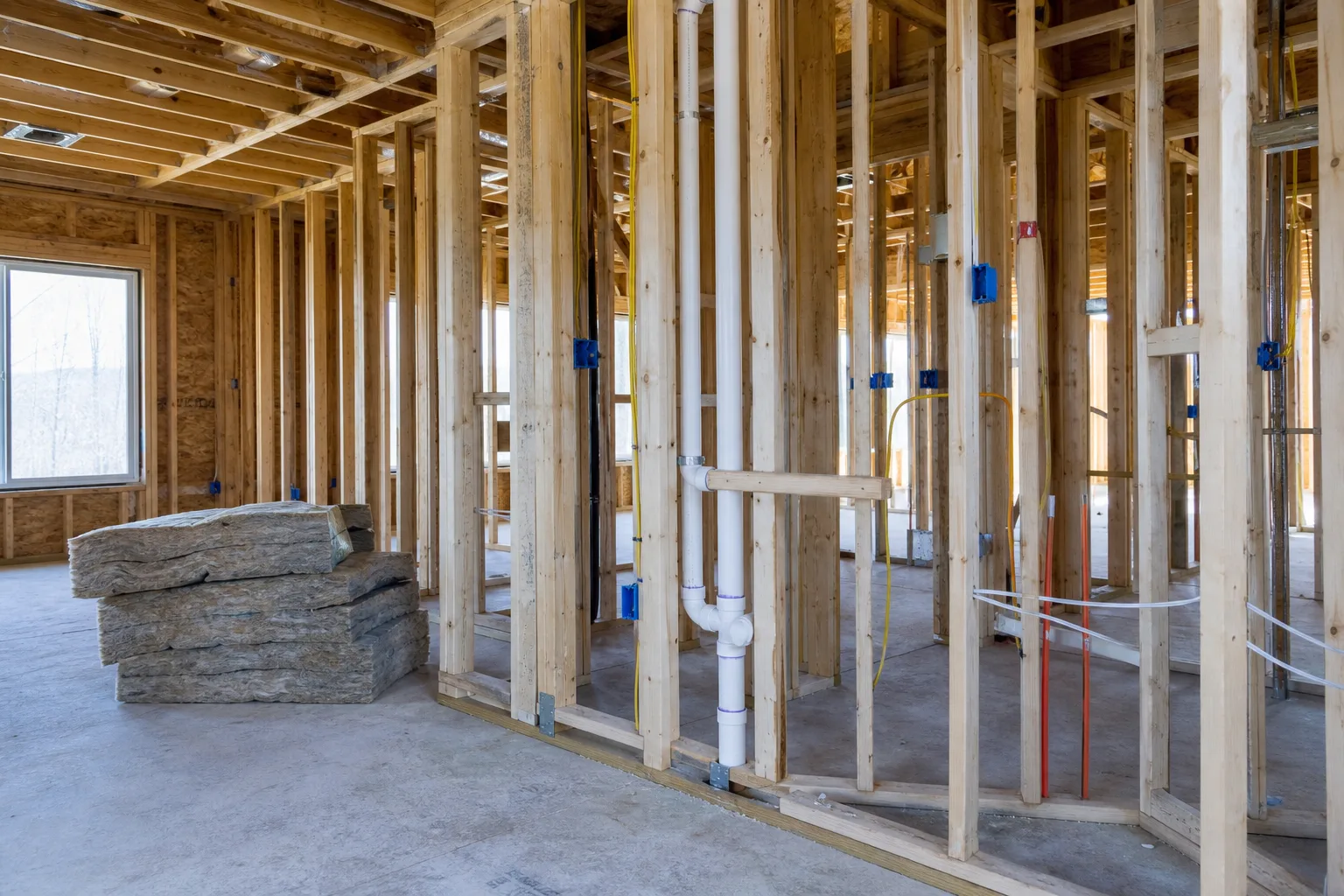
An open stud wall in July, with new plumbing and electrical runs visible and insulation stacked on the floor, is the most informative thing a homeowner will ever see about their own house. It stays that way for a few days. Then it is closed, painted and forgotten, and the information inside it becomes irretrievable without a saw. Most contracting disputes are made in exactly that window and fought about six months later, when the wall is shut, the crew has moved on, and two people remember the same conversation differently.
Photograph the Wall Before It Closes
The single highest value habit during any construction work is photographing every wall, floor and ceiling cavity before it is covered, with something in frame for scale and a tape measure showing distances from a fixed reference like a corner or a door frame. That record answers questions for as long as the house stands: where a pipe runs before somebody drills into it, whether the blocking for a future grab bar was actually installed, what insulation went in and how thickly, and whether the wiring behind a particular section is what the invoice describes.
Do it room by room and date the folder. It takes a few minutes per wall and requires no expertise whatsoever, since the value is in the existence of the images rather than in anybody understanding them at the time. Homeowners who have this collection find they use it repeatedly for entirely mundane reasons, and the occasion when it settles a dispute is a bonus rather than the main purpose.
Confirm the Verbal Changes the Same Day
Site conversations are the source of nearly every winter argument. A decision gets made standing in a doorway, both parties understand it slightly differently, and neither writes it down because it seemed clear at the time and putting it in an email felt like distrust. Six months later the outlet is in the wrong place and there is no record of what was agreed, only two sincere and incompatible recollections of a two minute exchange.
A short message sent the same evening fixes this permanently and costs nothing socially if it is framed as a note rather than a demand. Confirming that the shower valve is moving eight inches to the left, that this adds a stated amount, and that the finish date is unaffected gives both sides the same version and gives the contractor an opportunity to correct a misunderstanding while it is still cheap. Good contractors welcome it, because they lose these arguments as often as customers do.
Keep the Paper the Job Generates
A job produces documents that scatter immediately unless somebody collects them. Permits and the inspector's sign off, which prove the work was approved and matter enormously at the point of sale. Manufacturer documentation and serial numbers for anything installed, which is what a future warranty claim depends on. Product specifications for windows, insulation and roofing, since a rebate or an efficiency credit usually requires the model rather than a description.
Lien waivers belong in the same folder and are the item homeowners least often know to ask for. In many states a subcontractor or supplier who has not been paid by the general contractor can place a lien against the property even where the homeowner has paid in full, and a signed waiver at each payment stage is the ordinary protection against that. Requesting them is standard practice on commercial work and entirely reasonable on a residential job of any size.
The Payment Schedule Is a Record of Its Own
Every payment made on a job is also a statement about what has been completed, which is why a schedule tied to milestones rather than to dates is worth negotiating at the start. A payment released when the rough in passes inspection, another when the drywall is hung and a final amount held until the punch list is cleared gives both sides a shared definition of progress, and it prevents the situation where a homeowner has paid ninety percent for work that is seventy percent finished and has nothing left to hold anybody with.
The Punch List Written While Everyone Is Still Friendly
The end of a job is when leverage disappears, so the walkthrough belongs before the final payment rather than after it. Walking each room with the contractor, writing down every outstanding item on one shared list with a date beside it, and both parties keeping a copy converts a set of vague dissatisfactions into a finite piece of work. Items raised after the final check has cleared are requests. Items on a list agreed before it are obligations.
Which is what the July window is really for. Everything described here takes perhaps two hours spread across a project and none of it requires knowing anything about construction. The photographs, the same day confirmations, the folder of paper and the shared punch list all exist for the same reason: in January, when the wall is closed and the memories have diverged, the person with a dated record is having a completely different conversation from the person with a recollection.