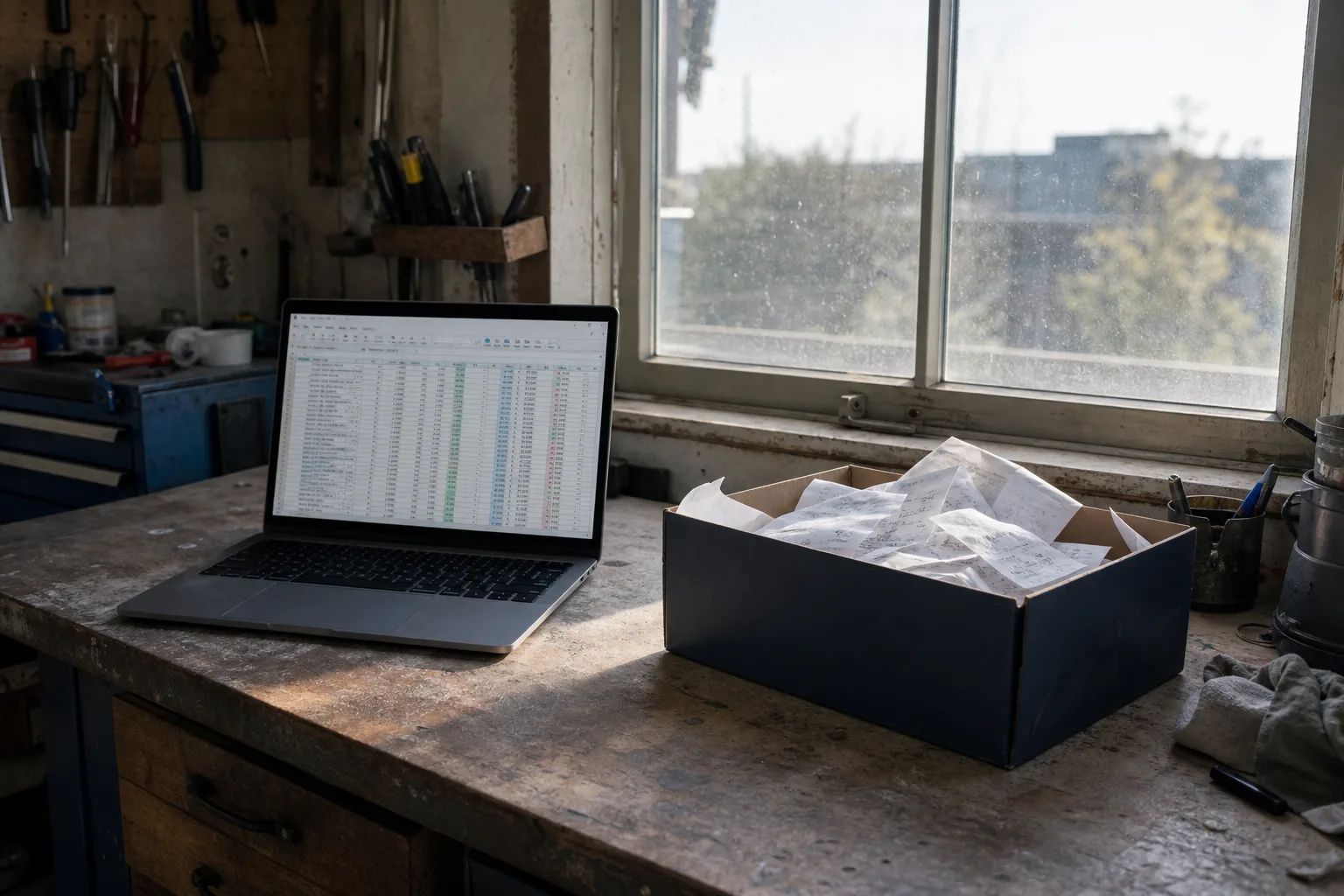
Every spring the same advice circulates among people who run small businesses: get organized, go digital, photograph your receipts, stop using a shoebox. It is sensible advice, it addresses a problem that is genuinely annoying, and it is also not the thing that goes wrong, because the shoebox is a symptom of a filing habit and filing habits cost an afternoon of somebody's life. What actually costs money is a set of decisions that had to be made during the year and were not, and no amount of scanning in April can reach back and make them.
The Decisions That Have a Deadline Inside the Year
A large share of what determines a small business tax outcome is fixed before the year ends and cannot be adjusted afterwards. Whether a piece of equipment was purchased in December or in January, whether a retirement account existed at all and which type it was, whether the business was operating under one structure or another, and whether estimated payments were made on the quarterly schedule or skipped in favor of settling up later. Each of those is a decision with a date attached, and by the time the receipts are being sorted every one of them has passed.
This is why the person who spends March in a panic and the person who spends it calmly frequently have identical filing systems. The difference is that one of them had a conversation in October about what the year was going to look like and adjusted something, and the other one discovered in March what the year had looked like. Neither outcome has much to do with whether the receipts were in a box or an application.
What the Records Are Actually For
Records exist to answer two different questions and most small businesses only use them for the second. The first question is what is happening right now, which is a management question answered monthly and used to decide things. The second is what happened last year, which is a compliance question answered once and used to complete a return. A shoebox is a perfectly adequate answer to the second question and a useless answer to the first, and that is the actual cost of it.
An owner who reconciles once a month knows in June that materials are running four points above where they were, and can do something about it while there are six months left. An owner who reconciles in March learns the same fact about a year that is over. The tax outcome may well be identical in both cases, but the business outcome is not, and the gap between the two compounds quietly every year the habit persists.
The Substantiation That Genuinely Depends on Paper
A narrower point does depend on the records themselves, and it is worth separating from the general advice because it is specific. Certain deductions require contemporaneous documentation rather than a reconstruction, and vehicle mileage is the clearest case: a log kept as the miles are driven is evidence, and a figure estimated in April from a calendar and a memory is an assertion. Travel and meals carry similar requirements around business purpose and the people involved.
The IRS publishes its recordkeeping requirements for small businesses in plain terms, and the theme running through them is timing rather than tidiness. What matters is that the record was made when the thing happened, not that it was filed neatly afterwards. A note in a phone at the moment of a trip satisfies this completely and a beautifully organized folder assembled from memory does not, which inverts the usual assumption about what good record keeping looks like.
A Bank Account Does More Than a Filing System
The single change that reduces spring workload most is not a scanner but a dedicated business account and a dedicated card used for everything the business buys. That one discipline turns the bank statement into a nearly complete expense record, removes the entire category of arguing with yourself about whether a purchase was personal, and makes the reconciliation something that can be done in twenty minutes rather than a weekend. It costs nothing beyond the discipline of using the right card.
The receipts still matter, because a statement line says a supplier's name and an amount rather than what was bought, but they become a supporting document rather than the primary record. Photographing them as they are handed over is a two second habit that removes the shoebox as a side effect rather than as a project, which is generally how a habit sticks.
What to Do With March Instead
The version of spring that works looks quite different from the version the advice describes, and it starts the same way: reconcile the year, produce the numbers, and file the return. Then spend the more valuable hour looking forward rather than backward: what the year just closed actually shows about pricing and mix, what is likely to change in the year that has already started, and which of the decisions with dates on them need making before they expire. That conversation is worth having with a bookkeeper or an accountant precisely because it is the part where advice changes an outcome.
None of which means the shoebox is fine, exactly. It means that emptying it is a chore rather than a solution, and that the relief people feel afterwards is the relief of having finished something unpleasant rather than the relief of having fixed anything. The decisions that mattered were taken, or not taken, in a quiet week the previous autumn, when nobody was thinking about receipts at all.