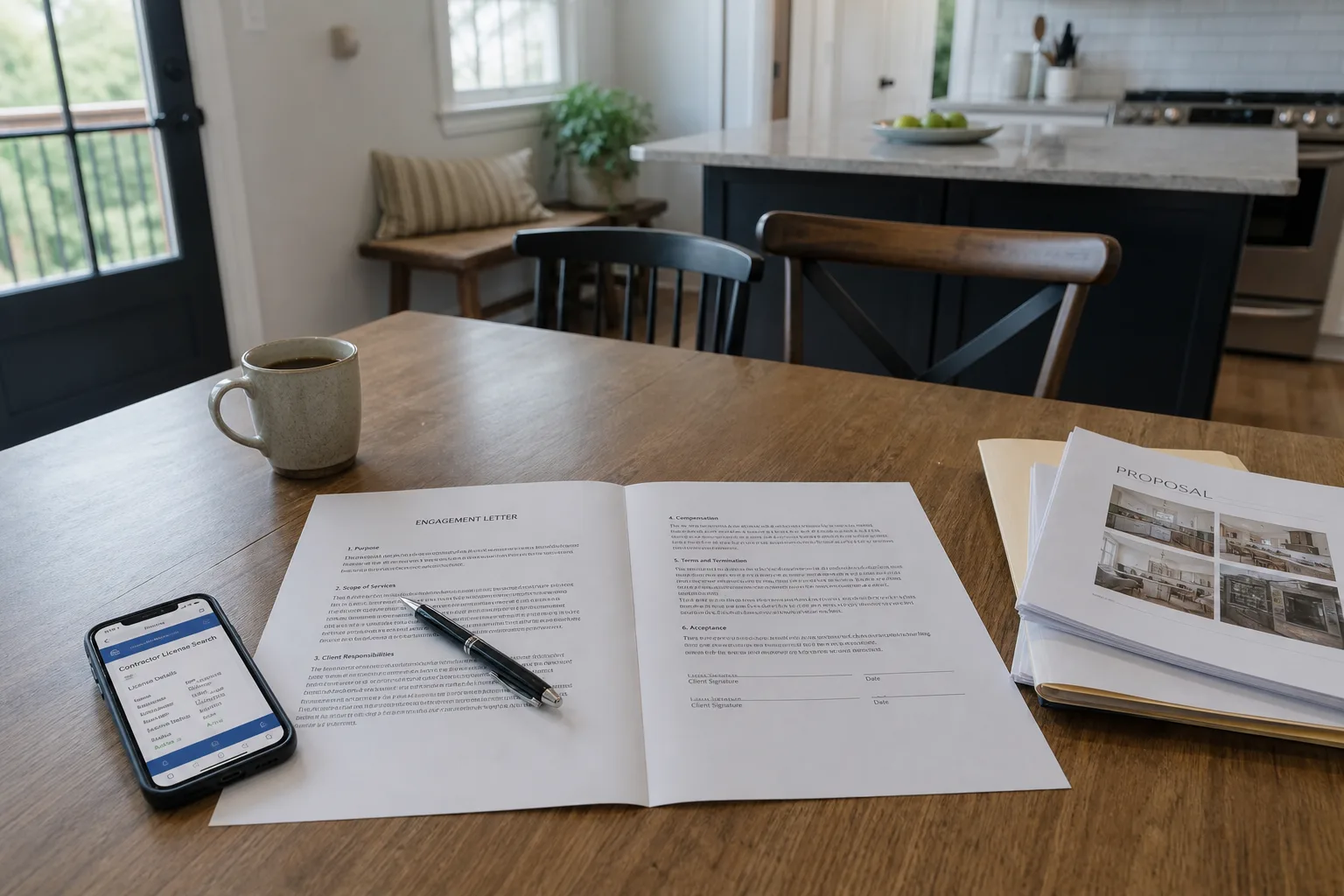
A diagonal crack appeared above a window in a 1962 ranch, running from the frame corner toward the ceiling, about the width of a dime at its widest. The owner made three calls. A foundation repair company offered a free inspection within the week. A licensed professional engineer who works alone quoted $650 for a site visit and a written report. A structural firm quoted an hourly rate with a four-hour minimum and said the report would follow in ten business days.
Same crack. Three prices, three timelines, and three documents at the end of it. The documents are not the same document, and that is the whole decision.
What you are actually buying is a deliverable
Households tend to shop for a person. They ask who is good, who came recommended, who answered the phone. That is a reasonable instinct and a poor filter, because the thing you take away from the transaction is not the person. It is a piece of paper, or a filed return, or a signed set of plans, or a letter you can hand to an insurer, a lender, a buyer's attorney or a permit office.
So the first question is not "are they any good." It is "what, precisely, will I hold at the end, and who else will accept it."
That question sorts the three calls above very quickly. The free inspection ends in a proposal: a scope of repair and a price. It may contain observations, but it is a sales document and it does not carry a stamp. The solo engineer's $650 buys a signed and sealed report, which a lender or a title company will generally accept and which a court can look at. The firm's hourly work buys the same kind of report with more review layered on top, and usually a named principal who will stand behind it if it is challenged.
If you only need to know whether to worry, the free inspection may be enough information and the proposal can simply be set aside. If the crack is going to come up at closing in eight months, the free inspection is worth very little, because nobody downstream will accept it.
Three channels, compared on the terms that matter
| Channel | What it costs | What you hold at the end | Who accepts it | What the fee structure rewards |
|---|---|---|---|---|
| Free assessment by the firm that would do the work | $0, bundled into the job | A proposal and a price | You, and nobody else | Finding work that needs doing |
| Independent practitioner, flat fee | Typically a few hundred dollars | A signed report limited to a defined scope | Lenders, insurers, permit offices, often courts | Finishing inside the fee |
| Firm, hourly with a retainer | Open-ended until scoped | Reviewed work product with a named principal behind it | The same parties, with more weight in a dispute | Thoroughness, and hours |
None of these is the honest option and none is the dishonest one. Each is honest about something different, and the fee structure tells you what each one is honest about. A free assessment is paid for by the repair, so it is very good at identifying repairs. An hourly engagement is paid for by time, so it will not stop early. A flat fee is paid for by the deliverable, so it will stop exactly at the edge of the scope and not an inch past it.
Read the engagement letter before you read the resume
Credentials are easy to check and easy to over-read. A wall of certificates settles less than one line in the engagement letter does. Four clauses carry most of the weight.
Scope of Services. Look for a sentence that starts with a limiting word. A real one reads something like: "This engagement is limited to visual observation of accessible portions of the exterior foundation wall and the interior of the affected room. No excavation, no removal of finishes, and no soils testing is included." That sentence is the difference between a report that answers your question and one that answers a narrower question you did not ask. If no clause limits the scope, the scope is undefined, and an undefined scope is not generosity. It is a dispute waiting to happen.
Deliverable. The letter should name the output and its format. "A written report, signed and sealed, delivered in PDF, within ten business days of the site visit." If the letter says only "consultation," you may be paying for a conversation.
Fees and Expenses. On hourly work, look for the rate, the minimum increment, who else bills to the file, and whether travel and report preparation are billable. A clause reading "time is billed in quarter-hour increments, including telephone calls and correspondence" is normal and worth knowing in advance.
Conflicts and affiliation. Ask in writing whether the practitioner, or any affiliate, performs or receives referral payments for the remedial work they might recommend. A straightforward answer is a good sign either way. "We do not perform repairs and receive no compensation from contractors" is a clean position. So is a disclosed affiliation you decide you can live with.
Four tests that separate good from plausible
Plausible sounds like expertise. It is fluent, it is confident, and it arrives fast. Good sounds slower and more bounded. These four questions tend to split them apart.
- Ask what would change their answer. Someone with real command of the subject can name the specific observation that would flip the conclusion: a measured deflection past a threshold, a crack that widens over a monitored period, a moisture reading in a particular range. Someone working from pattern recognition will restate the conclusion more firmly.
- Ask for a redacted prior deliverable. A report from another job with names and addresses removed. This is a normal request. You are buying a document, so look at one. You will learn more in four minutes of reading than in an hour of conversation.
- Ask what they cannot tell you. A good answer includes a real limit: what is behind the finish, what the soil is doing, what happened before they were called. A refusal to name any limit is itself the finding.
- Ask who else will accept this. Then verify it with that party, not with the practitioner. One call to the lender or the claims adjuster settles whether the document does the job you are buying it for.
Licensing is a floor, not a ranking
State licensing boards hold the registry that tells you whether a license is active and whether there is public discipline attached to it. That check takes a few minutes and should always be made, but it tells you the person cleared a minimum, not that they are the right choice for your crack in your 1962 ranch. The Federal Trade Commission oversees how services are advertised to consumers, which is why a claim made in writing in an engagement letter is a sturdier thing to rely on than the same claim made on a phone call.
Get the limiting clause in writing before any money moves. Households that do this tend to spend less overall, not more, because a scoped $650 report routinely prevents a $14,000 repair from being bought on the strength of a free inspection. The paperwork is the cheapest part of the transaction and the part that decides the rest of it.