Look at almost any list of household maintenance tasks published in the spring and the same thing appears: forty items, all of them sensible, arranged by system rather than by season, and quietly assuming a free Saturday that never arrives. Lists like that fail somewhere in the second week of April. A calendar built around the weather works better, because the weather sets deadlines that a good intention cannot, and because most jobs worth doing have a short window in which they are easy and a much longer stretch in which they are expensive or simply impossible.
The Fall Jobs That the First Freeze Will Grade
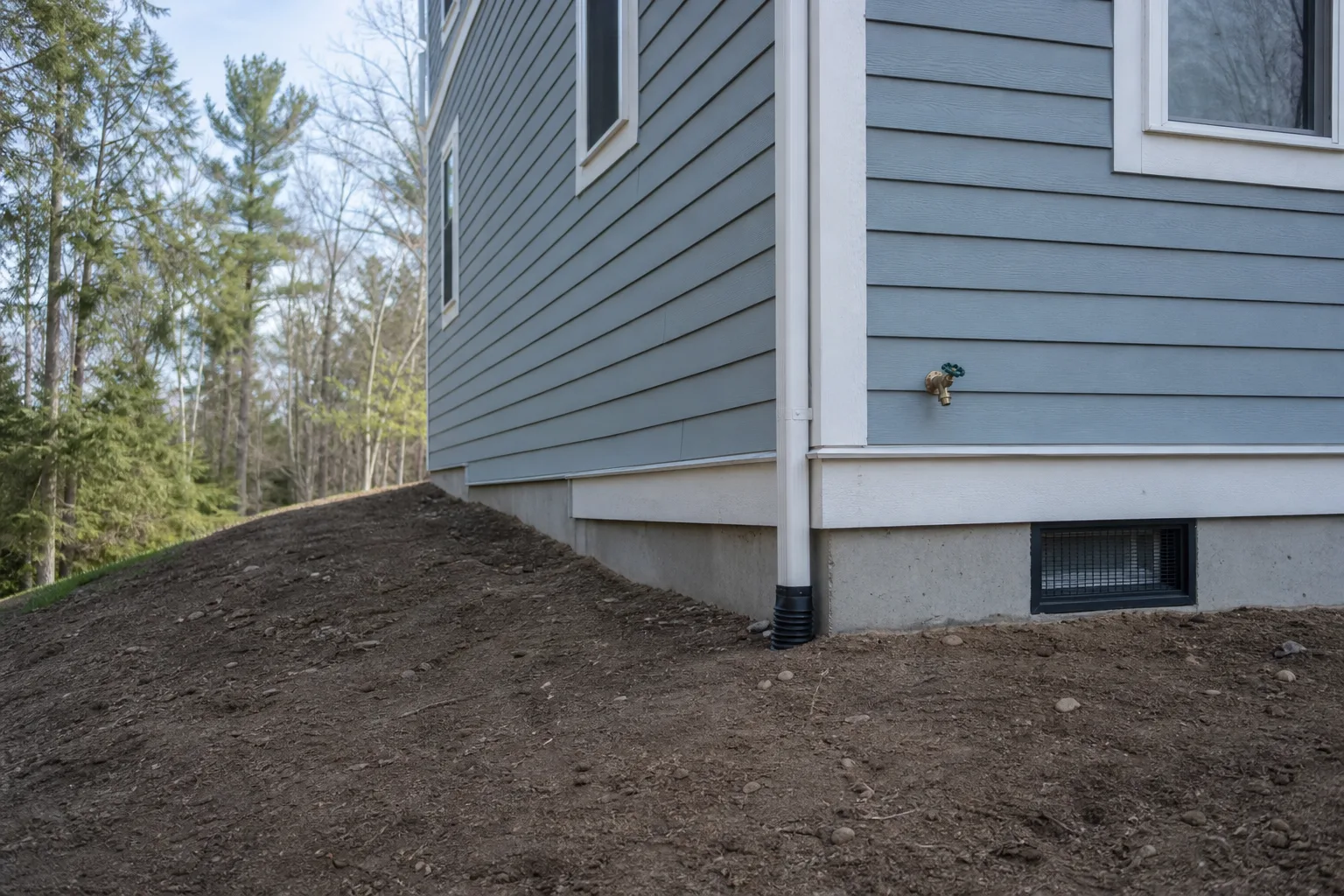
Everything outside that involves water has a deadline, and the deadline is the first hard freeze rather than a date. Clear the gutters after the leaves have actually finished falling instead of halfway through, check that every downspout discharges well away from the wall, and walk the perimeter looking at how the soil sits against the foundation, since ground that has settled into a shallow bowl over ten years will send a winter's rain straight down against the footing. Then shut off and drain the exterior hose bibs, and disconnect the hoses, which is the single cheapest failure to prevent all year.
Heating gets its attention in the same stretch, well before anybody needs it, because a furnace that will not start is a very different problem in October than it is in January. Replace the filter, have the system serviced while technicians are not working through a backlog, and test the carbon monoxide alarms rather than assuming the absence of chirping means anything. If there is a fireplace or a wood stove in use, the flue inspection belongs here too, and it is the sort of job where the value lies entirely in somebody competent looking rather than in anything they do afterwards.
The third fall category is sealing, which pays for itself in a way the others do not. Weatherstripping on exterior doors compresses and hardens over a few years, caulk joints around window trim open up, and both are visible on a cold morning to anyone willing to hold a hand near the frame. Any pipe run in an unheated crawlspace or garage should be insulated before it is tested, and the crawlspace vents, if the house has them, need whatever seasonal treatment local practice calls for. None of this is skilled work and all of it is graded by a cold snap.
Deep Winter, When the Most Useful Work Is Watching
Between the first freeze and the thaw there is very little to do outside and quite a lot to notice. Icicles hanging in a neat row along one eave are decorative. A thick ridge of ice at the gutter line with water backing up behind it is an ice dam, and it means warm air is escaping into the attic and melting snow that refreezes at the cold edge. The fix belongs to insulation and air sealing rather than to the roof, and a winter that shows the pattern clearly is the best diagnostic anyone gets.
Condensation is the other winter signal worth reading. Persistent water on the inside of windows, damp patches in a closet on an exterior wall, or a bathroom that stays humid for hours after a shower all point at ventilation rather than at the window or the wall. Beyond watching, the useful winter habits are short: know where the main water shut off is and be able to reach it in the dark, and during a hard freeze warning open the cabinet doors beneath sinks on exterior walls and let a faucet run a thread of water.
The Spring Walk Around the Outside
The first mild weekend is for looking rather than for doing, and a pair of binoculars from the ground answers most roof questions without anyone climbing anything. Look for shingles that have lifted, curled or gone missing, for a course that sits unevenly, and for the metal flashing where the roof meets a wall, a chimney or a vent, because flashing is where the great majority of roof leaks begin. Note what you see and photograph it, since a photograph taken every spring turns a vague impression into a record of how fast something is changing.
Then walk the walls. Paint on a south or west elevation ages roughly twice as fast as it does on the shaded sides, and the places it fails first are the horizontal surfaces and the joints: window sills, the bottom edge of trim, the seam where two boards meet. Caulk that has pulled away from a joint is a two hour job in April and a carpentry job three years later, once water has been getting behind it every time it rains. Any wood in direct contact with soil is on a shorter clock than the rest of the house.
Drainage deserves its own pass now that the ground is soft and visible. Check that downspout extensions are still where they were put, look for a channel worn into a flower bed that shows where water actually goes, and test the sump pump by lifting the float rather than by trusting it. A sump pump that has not run all winter is not necessarily a working sump pump, and the discovery that it has seized is one that should be made on a dry Sunday rather than during the first serious storm of the season.
Summer, and the Systems That Fail in the Heat
Cooling gets the same treatment heating got in the fall, and for the same reason. Clean or replace the filter, rinse the outdoor condenser coil once the pollen has finished, cut back the shrubs that have grown against it, and check that the condensate drain line is actually draining, because a blocked line is the most common way an air conditioner produces water damage instead of cool air. Attic ventilation matters more in July than at any other point in the year, and a roof space that feels like an oven is telling you something about both the shingles above it and the bills below.
Summer is also the only comfortable window for outside work that needs dry weather and long days. Exterior painting, wood repairs, deck refinishing and anything involving a ladder all belong here rather than being attempted in a rush in October. Two smaller jobs earn their place in the same stretch: clearing the dryer vent duct properly rather than emptying the lint trap, and cutting back tree limbs that have grown within reach of the roof, siding or service lines while the tree is fully in leaf and its actual size is obvious.
The Jobs That Belong to No Season at All
A handful of items run on their own clock and are best pinned to a date the household already remembers. Smoke and carbon monoxide alarms need testing monthly, batteries yearly and the whole unit replacing after its stated service life, which is shorter than most people assume and printed on the back. The Consumer Product Safety Commission is the body that announces recalls on household products, and a five minute check of a model number after a strange failure is occasionally the difference between replacing an appliance and discovering the manufacturer will do it.
The water heater wants draining or flushing on a schedule set by local water hardness, and its anode rod, which is a sacrificial piece of metal that corrodes so the tank does not, is worth inspecting on tanks past their fifth year. The rubber supply hoses on a washing machine have a service life measured in years and fail at the worst possible moment, so replacing them with braided stainless lines is a twenty minute job with an unusually good return. Under every sink there is a shut off valve and a trap, and both reward a look with a flashlight twice a year.
A List That Survives Contact With a Real Year
What makes this version work is that it asks for about two hours at four points in the year rather than a lost weekend, and each of those two hour blocks has a natural trigger: the first cold morning, the first thaw, the first mild weekend, the first genuinely hot week. Write the date beside each item as it gets done, in a notebook or a phone note, because the record is worth as much as the work. It answers the question of when the furnace was last serviced without anyone having to guess, and it is the thing a buyer's inspector reads with obvious relief.
None of this prevents everything, and a house will still occasionally do something expensive and unannounced. What the seasonal version changes is the proportion of problems that arrive as a small job at a convenient moment rather than as an emergency at an inconvenient one. That spring list of forty items was never wrong about the tasks. It was wrong about the calendar, and about assuming that a homeowner needs a plan when what they actually need is a set of deadlines that arrive on their own.