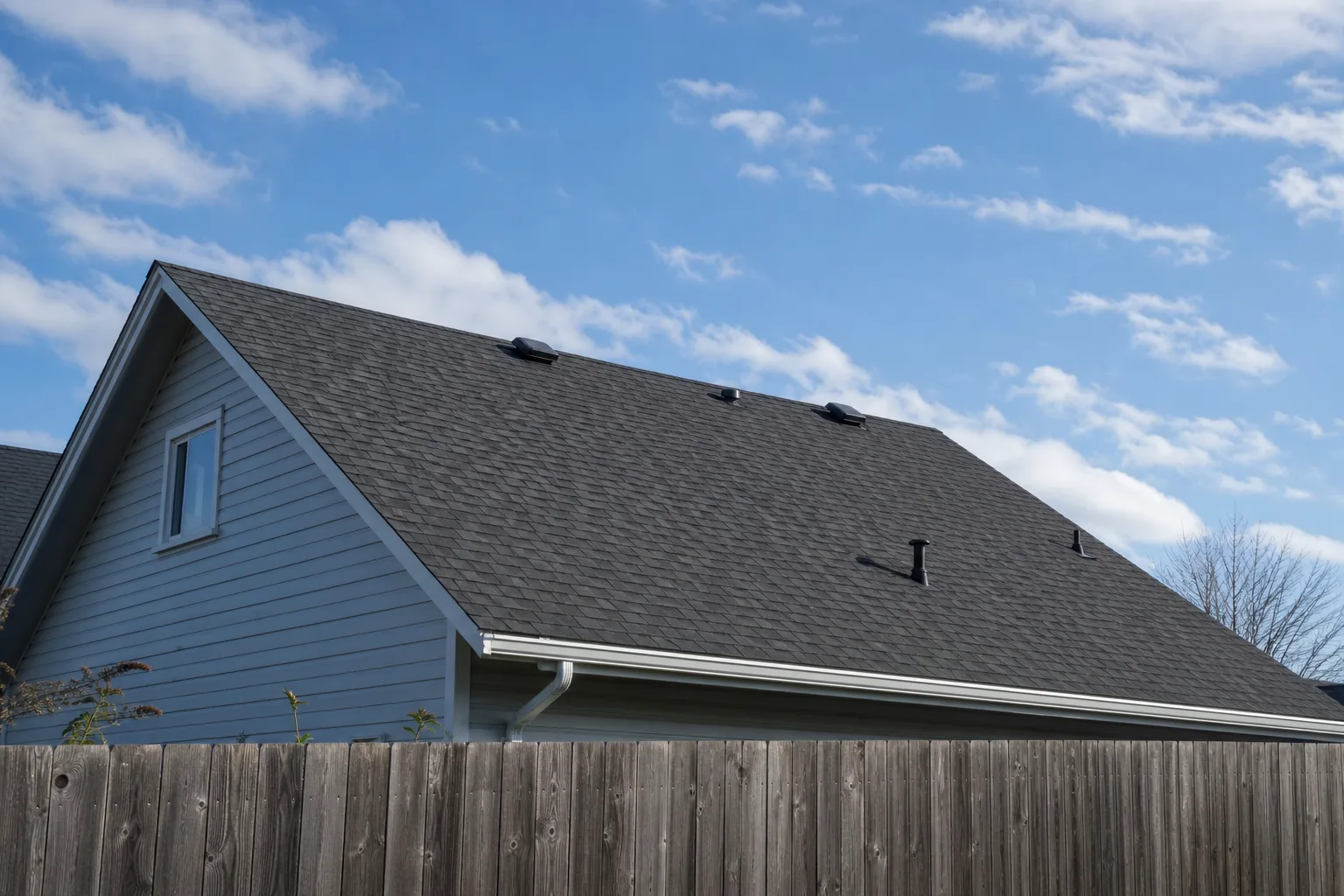
Homeowners policies are widely assumed to have one deductible, printed near the top of the declarations page, applying to whatever happens. That was broadly true a decade ago and is much less true now, particularly in states that see hail or high wind with any regularity. Two separate provisions have been quietly added to a great many policies, both of them buried in the schedule rather than announced at renewal, and between them they decide whether a storm damaged roof produces a modest bill or a five figure one. Both take about ten minutes to check.
The Deductible That Is a Percentage Rather Than a Number
The first line is a separate wind and hail deductible, expressed as a percentage of the dwelling coverage limit instead of as a flat amount. The distinction matters enormously because the percentage applies to what the house is insured for rather than to the size of the loss, so a modest percentage on a substantial dwelling limit produces a deductible many times larger than the all other perils figure sitting three lines above it. A homeowner who knows their deductible as a round number is frequently quoting the wrong one for the peril most likely to damage a roof.
The practical consequence is that entire categories of claim stop being worth making. Repair work that would once have been submitted now falls below the deductible, which changes how a household should think about maintenance and about small storm damage, and which is exactly what the provision was designed to do. That is not a reason to be alarmed, but it is a reason to know the number, because discovering it during a claim is how people end up feeling misled by a policy they agreed to.
How the Roof Itself Is Valued When It Is Paid For
The second line concerns settlement basis, and it is the one that produces the largest surprises. A policy paying replacement cost for the roof pays what it costs to put a new roof on, subject to the deductible. A policy carrying a roof surfaces schedule pays actual cash value instead, which is replacement cost minus depreciation based on the age of the covering, and depreciation on an asphalt roof accumulates steadily across its rated life. On an older roof, the difference between those two approaches is most of the price of the job.
These schedules have spread widely and are often applied to roofs above a certain age, sometimes with the depreciation table printed as an endorsement in the back of the policy. Reading that table is worth the effort, because it converts an abstract worry into a specific number for a specific roof at a specific age, and because it makes clear whether replacing a roof at year eighteen out of pocket is better arithmetic than waiting for a storm to do it.
The Words That Decide Whether Damage Counts
Alongside the two numbers sit definitions that determine whether a claim exists at all. Cosmetic damage exclusions, increasingly common on metal roofs, remove coverage for dents and marks that do not affect the ability of the covering to keep water out. Matching provisions govern what happens when a damaged section cannot be matched to the rest of the roof, which decides whether a claim covers one slope or the whole surface. Neither of these is hidden, and neither is normally mentioned unless somebody asks.
Wear and tear is the third piece of vocabulary. A roof that has reached the end of its service life is not a covered loss, and an insurer inspecting after a storm is distinguishing between damage caused by that storm and deterioration that preceded it. That distinction is much easier to argue when the homeowner has photographs of the roof from before the season, which is a free and mildly tedious thing to produce on a clear afternoon in March.
What Changed and Why It Changed
None of this arrived arbitrarily. Severe convective storms have produced repeated large scale hail and wind losses across wide areas, and insurers responded by shifting a share of the smaller and more frequent losses back to policyholders while continuing to cover the catastrophic ones. FEMA's public preparedness material has spent years pointing households toward exactly this kind of pre season review, on the reasonable theory that the cheapest moment to understand a policy is well before there is any weather in the forecast, and the same logic applies here.
Understood that way, the provisions are a pricing mechanism rather than a trap, and they leave a homeowner with real choices. Some carriers still offer a flat deductible or full replacement cost on roofs for a higher premium, some allow the percentage to be bought down, and the difference in annual cost is often modest compared with the difference in exposure. Asking the question at renewal is the only way to find out which options exist on a particular policy in a particular state.
Ten Minutes With the Declarations Page
The review itself is short. Find the deductible section and check whether there is more than one figure. If a wind or hail deductible is shown as a percentage, multiply it by the dwelling limit and write the answer down in dollars, because that is the number that matters and nobody else will convert it for you. Then look for any endorsement referring to roof surfaces, roofing materials or actual cash value, and read what it says about the age of the covering.
Finish by taking photographs of every slope from the ground and noting the roof's installation date, then put all of it in the same folder as the policy. Storm season arrives on its own schedule and the paperwork does not improve while it is happening. Two lines on a page, converted into two plain numbers on a note, are the difference between a homeowner who knows what their roof is insured for and one who is going to find out from an adjuster in July. Federal preparedness guidance is a reasonable place to start on everything else in the same folder.