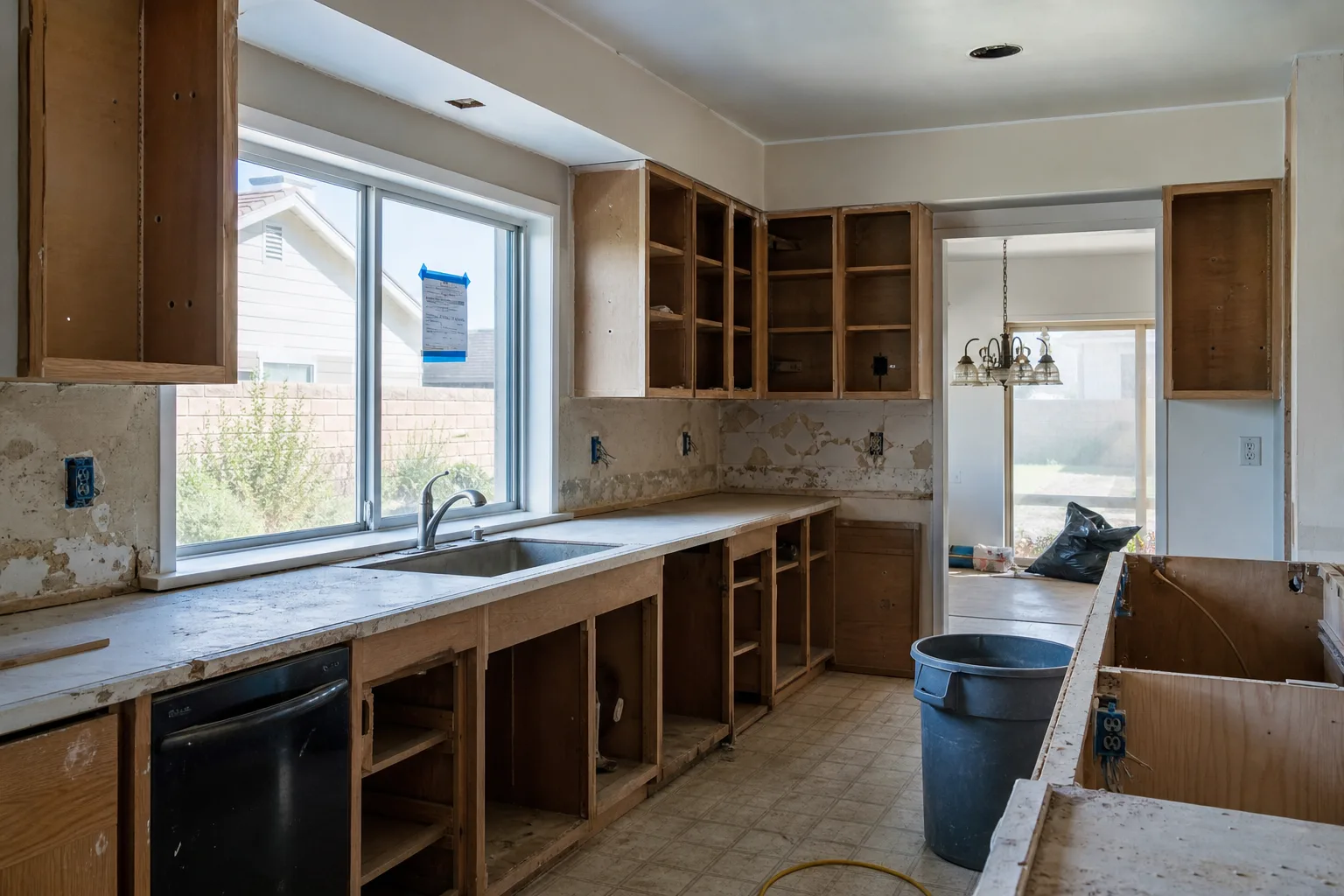
Two houses on the same street off Landa, both built in the early 1980s, both sold last spring. One seller spent roughly the price of a used truck on paint, flooring, and a kitchen refresh. The other spent close to the same figure on a foundation evaluation, a new service panel, and the sewer line, then painted with what was left. The second house appraised higher and closed without a repair amendment. The first went under contract twice and came back both times after inspection.
That is the whole argument in miniature. People who do this once tend to compare improvements by category: kitchens pay, bathrooms pay, pools do not. People who do it repeatedly stop comparing categories and start comparing execution, because the same improvement can return its cost or lose half of it depending on how it was done and whether anyone can prove it.
The returns table nobody publishes is the one about depth
Ask a contractor who has turned forty houses what separates a good job from a barely adequate one and you will not hear about tile grade. You will hear about three things: what got removed before the new work went in, whether the new work was inspected, and how the new work meets the old work at the edges.
A kitchen is the clearest example. The barely adequate version paints the existing boxes, swaps the doors, drops in a laminate counter, and leaves the 1983 branch circuit feeding the countertop outlets. It photographs well. It survives a buyer's walkthrough. It does not survive an inspector who notes ungrounded receptacles and no GFCI protection within six feet of the sink, and it does not survive the buyer's lender if the appraiser flags anything structural behind it.
The good version costs maybe fifteen percent more and includes the circuit. The resale difference is not fifteen percent. It is the absence of a repair negotiation in which the buyer's agent names a number with no relationship to the actual cost of the fix. That is the hidden return on doing it properly, and it does not appear on any national cost-versus-value chart.
What holds value in Comal County, and what quietly does not
Some of this is regional. In this part of Texas the items that consistently carry their weight at closing are the ones tied to heat, water, and movement.
- HVAC replacement, documented. A condenser dated within the last few years, with the matching air handler and a visible model number, changes how a buyer reads the whole house. A condenser replaced without the coil is a half measure that an inspector will name in the report.
- Roof with a transferable record. Hail work is common here. A roof replaced after a storm, with the invoice and the final inspection, prices very differently from a roof that someone says is five years old.
- Foundation work with an engineer's letter. Piers alone are a liability. Piers plus a sealed letter from a licensed engineer, plus the lifetime transferable warranty paperwork, is an asset. Same concrete, different outcome.
- Electrical service upgrades. Panels from certain eras get named by inspectors and occasionally by insurers. Replacing one under permit removes a conversation entirely.
- Plumbing, specifically supply lines and the sewer. A camera report on the main line is cheap and it preempts the single most expensive surprise in an older house.
Against those, the spend that most reliably fails to come back: high-end finishes in one room while the rest of the house stays at builder grade, landscaping beyond cleanup and mulch, sunroom and patio enclosures that were never permitted, pools in anything but the upper price tiers, and any conversion that adds square footage the county has no record of. Unpermitted additions are the quietest value destroyer in the market. The space is real, the appraiser often cannot count it, and the buyer's lender sometimes will not touch it.
The permit is not bureaucracy, it is the receipt
Here is the part that only becomes obvious after several projects. The permit file is the document that converts work you did into value a stranger will pay for. A buyer standing in a finished garage conversion has no way to know whether the framing is right. An appraiser has no way to know either. The city record is the only neutral party in the room.
Pulling a permit in New Braunfels for a panel swap or a water heater relocation costs a modest fee and an appointment. Skipping it saves a week and costs you leverage for the rest of the house's life, because the next seller inherits the gap too. Crews that work here regularly know which inspectors look at strapping and which look hardest at egress windows, and a good contractor will schedule around that knowledge rather than hope. The ones who propose working without the permit are telling you something about the rest of the job.
Energy-related upgrades have their own paperwork logic. The Department of Energy oversees appliance efficiency standards and the labeling that sits on the equipment, and the label matters at resale because it is the one claim about the unit that is not coming from the seller's mouth. Keep the sticker, keep the manual, keep the install invoice.
The arithmetic that sends some houses to a cash buyer instead
Not every house should be improved before sale. The calculation is simple enough to run on paper. Add the cost of the work, the carrying cost for the months it takes, the permit and inspection time, and the realistic probability that one item opens up into three. Then compare that total against the gap between the as-is offer and the renovated list price. When a house needs foundation work, a roof, and a panel at the same time, the gap often closes to nothing, and the seller is funding a renovation for someone else's benefit.
That is the circumstance in which a direct sale earns its discount. Sellers in this situation search for firms that we buy houses in new braunfels tx describes, and the useful comparison is not offer price against Zillow, it is net proceeds against net proceeds after repairs, commissions, concessions, and four more mortgage payments.
Three tests before you write the check
Experienced rehabbers apply the same filter to every proposed line item. First, will a third party be able to verify this was done, through a permit, an engineer's letter, a transferable warranty, or a dated invoice with a license number on it. Second, does this fix something a licensed inspector would otherwise write up, or does it only change how a room looks. Third, how does the new work meet the old work, because a new floor that dies at a threshold with a quarter-inch lip reads as cheap no matter what the floor cost.
Work that passes all three tends to come back at closing. Work that passes only the second is usually worth doing anyway. Work that passes only the third is decoration, and decoration sells a house faster without raising its price.
The pattern repeats across price points. Buyers do not pay for effort, and they do not pay for materials. They pay for the absence of unanswered questions, and every permit, letter, and invoice in the folder is one question already answered before anyone asks it.