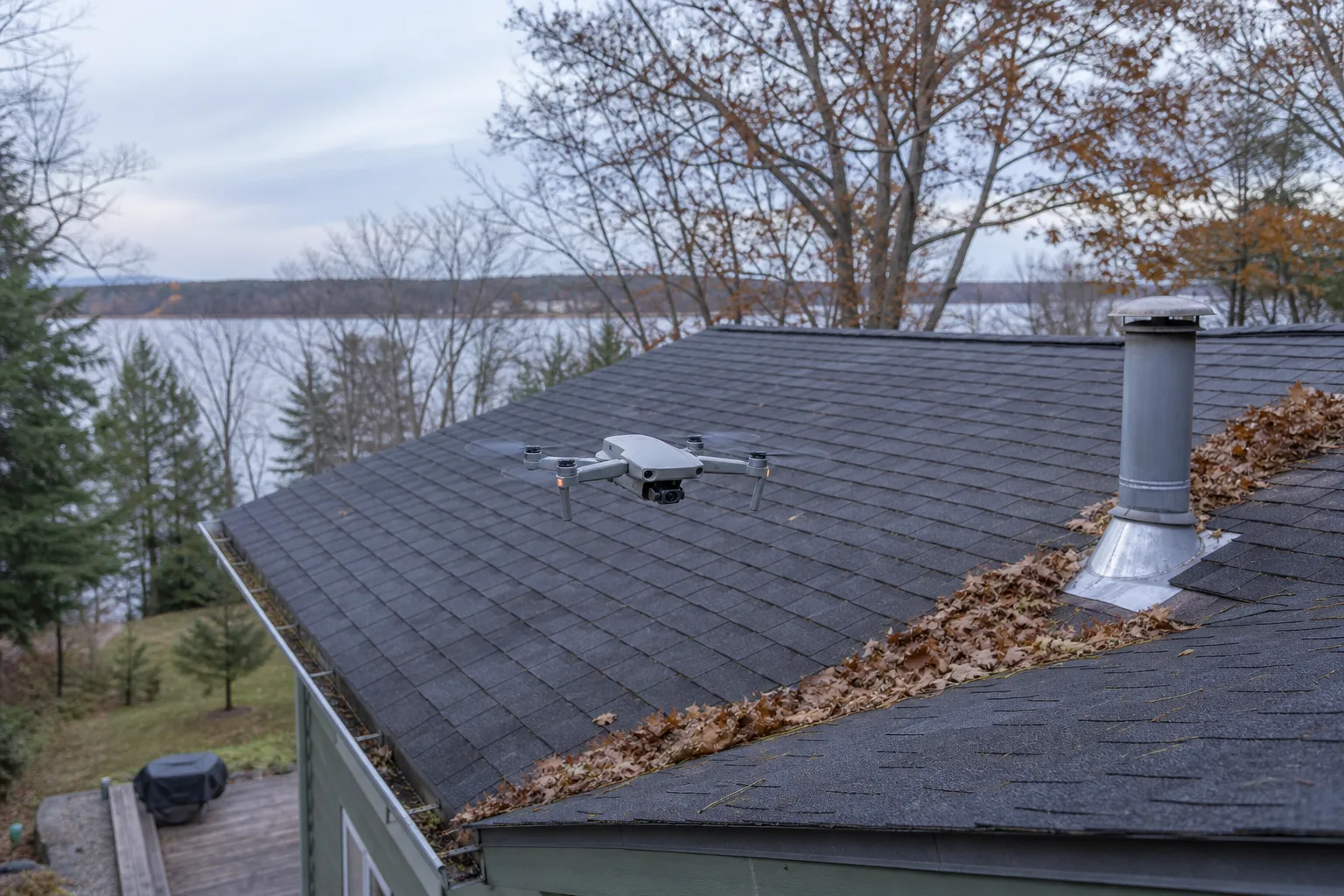
A homeowner in a 1990s subdivision ordered an aerial roof survey in the last week of October, four months after a hailstorm that her neighbors had all filed on. The report came back eleven pages. Page three listed seven impact marks on the north slope, two on the west, and a note about granule loss around the furnace flue. Page nine recommended "evaluation by a licensed roofing contractor prior to the onset of freezing temperatures." She read that line and assumed the roof was failing. It was not. The report never said it was.
Most of what people do wrong after an inspection happens in the gap between what a report states and what a reader assumes it means. In fall, that gap gets expensive, because the calendar starts applying pressure that the document itself does not.
Read the limitation clause before you read the findings
Nearly every aerial roof report carries a scope paragraph, usually on page one or two, and it is the paragraph that defines everything after it. Hers read: "This report reflects conditions visually observed on the date of inspection. No destructive testing, removal of materials, or interior evaluation was performed. Areas obscured by debris, snow, standing water, or vegetation were not inspected."
Three things follow from that sentence. The inspector did not lift a shingle, so nothing in the report speaks to the condition of the underlayment or the decking. The report is dated, and conditions after that date are outside it. And the October leaf cover on the north slope, which the photographs plainly show, is an excluded area by the terms of the document that contains the photographs.
The findings section then uses its own vocabulary, and the words are not interchangeable. "Impact mark" describes a visible surface feature. "Mat fracture" is a condition call. "Recommend further evaluation" means the inspector saw something that warrants a closer look by someone with different access. None of those is a statement that the roof leaks or that it must be replaced. Her report said "impact marks consistent with hail" and "recommend further evaluation." It did not say the word failure anywhere.
The seasonal clock runs on three separate deadlines
What changes in fall is not the roof. It is that three unrelated countdowns start overlapping.
The first is the policy's notice requirement. Homeowners policies generally require notice of loss that is prompt, and many name a fixed outside window for filing a claim after a damage event. That deadline is tied to the storm date, not the inspection date, and it does not pause because the inspection happened in October. If a summer hail event is the suspected cause, the clock has already been running for months. Find the date, find the clause, and read the exact wording before deciding anything else.
The second is weather. A sealed shingle that has lost its bond will not reseal reliably once roof surface temperatures stay low, which is why the recommendation in her report was phrased around freezing temperatures rather than around severity. That is a scheduling instruction, not a verdict.
The third is the contractor calendar. Roofing crews in most markets compress their remaining work into the weeks before the first hard freeze, and quotes written in that window reflect it. Nothing in the inspection report obligates you to buy into that window.
The rules the flight itself runs under
Commercial drone flights over residential property are governed by federal aviation rules, and the Federal Aviation Administration is the body responsible for certifying the remote pilots who conduct them. A firm offering drone mapping services for insurance and roofing work should be able to produce a certificate number without hesitation, along with the flight date and the camera resolution used. Those details matter later: an adjuster comparing your documentation against the carrier's own imagery will care when the photographs were taken and at what ground sample distance.
Ask also whether the deliverable is a set of photographs or a measured model. A measurement report with slope areas, ridge and eave lengths, and pitch gives a contractor enough to write a line-item estimate without climbing. That is the piece that turns a vague finding into a priced decision.
Sorting seven marks into three piles
Her seven marks sorted this way, and most reports sort the same way.
- Act this month. Anything with an open path for water. Her flashing detail at the flue showed displaced sealant in two photographs. That is a sealed-and-documented job, small money, done before the first freeze.
- Document now, decide in spring. The impact marks themselves. Photograph them, date them, note them in writing to the carrier if a claim is being considered, then let a contractor make a condition call in April when a test square can be cut without fighting the weather.
- Nothing required. Granule accumulation in the gutters on a roof in its second decade, absent other indicators. Note it, re-check next year.
She sealed the flashing for a few hundred dollars, filed written notice with her carrier citing the storm date, and scheduled the evaluation for March. The report supported every one of those moves. It just never told her to make them.
The useful habit is to treat the inspection as evidence rather than instruction. Quote the clause back to yourself, check it against the dates that bind, and the list of seven stops looking like a crisis and starts looking like a schedule.