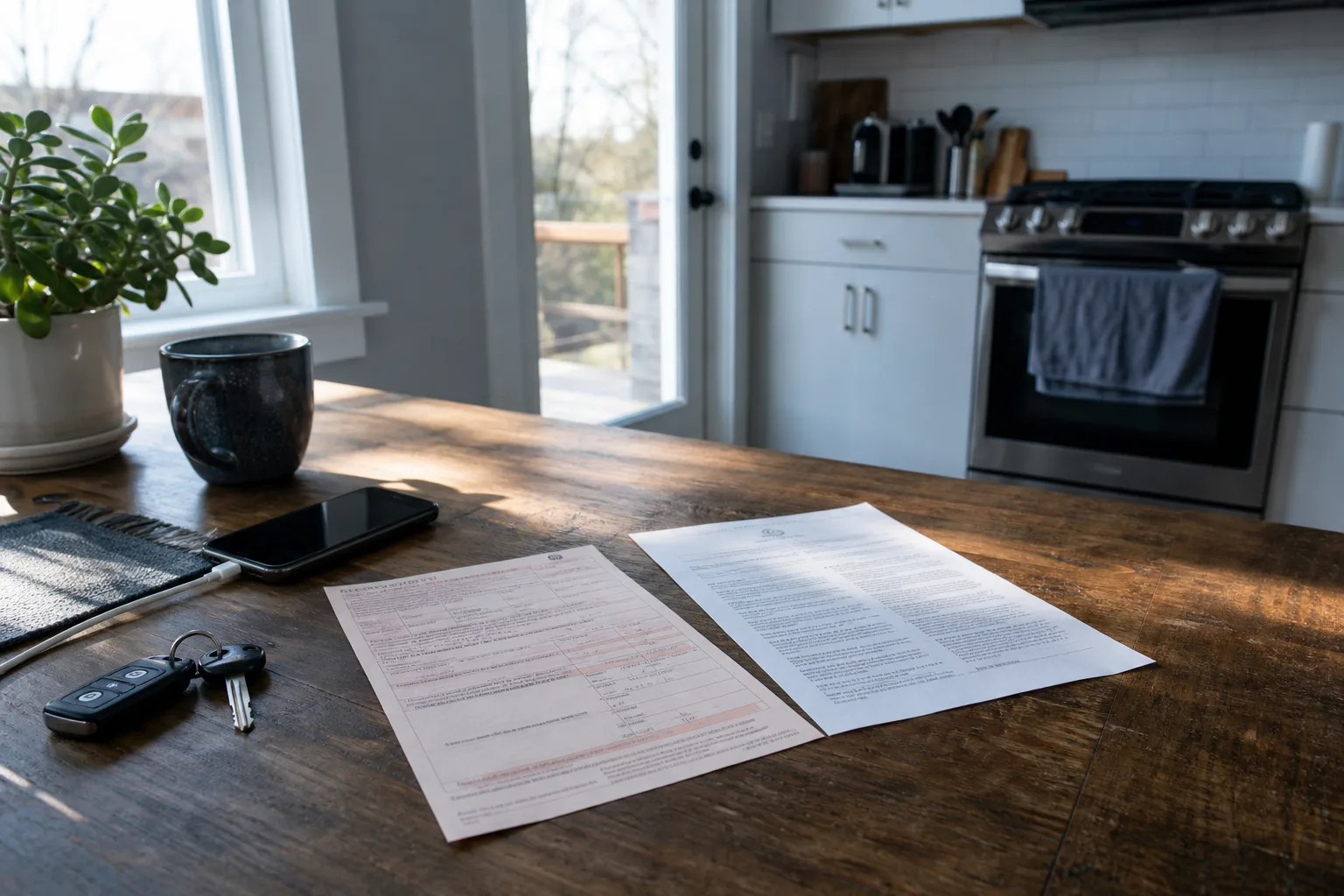
A driver is released at four in the morning with a citation, a court date a few weeks out, and a separate sheet of paper about the license. The car is impounded. The phone is at nine percent. By the time the sun is up, the question in the kitchen is the one that matters: is this the kind of problem a person handles themselves, or the kind that needs counsel? Most legal problems in an ordinary life are the first kind. This one is not, and the reason is worth understanding, because it is the same reason that applies to every other situation where hiring an attorney is not optional.
The useful test is not how serious the problem feels. It is what is at stake, who decides, and how fast the window closes.
The simplest version of a legal problem, and why most of them stay simple
A large share of what people call legal trouble resolves with one letter, one form, and a calendar entry. A security deposit withheld without an itemized statement. A collection notice for a debt that is not yours. A parking ticket issued to a car that was not there. A neighbor's tree limb. A disputed charge on a card statement. These share three features: the money at stake is bounded, the decision maker is an administrator or a small claims judge, and the process was built on the assumption that unrepresented people would use it.
In those matters, hiring an attorney often costs more than the dispute is worth, and the attorney's first advice would be to send the letter you were already drafting. Small claims courts in most states cap the amount in controversy and many restrict or discourage lawyers outright. Consumer protection agencies run complaint intake that a person can use in an evening. The Federal Trade Commission is responsible for a good deal of the consumer side of this, including unfair and deceptive practices and the rules that govern how debt collectors may contact you. If the worst outcome is that you lose the money and move on, you are almost certainly in the self-help tier.
A speeding citation sits at the edge of that tier. It is a fine, a hearing you can request, and possibly points. Plenty of people contest one without help and do fine.
Where the line actually sits
The line moves when any one of four things enters the picture: criminal exposure, your liberty, a license you earn a living with, or a record that follows you through background checks. A driving under the influence charge triggers all four at once, which is why it is a clean example of the far side of the line.
It is a criminal charge, not a traffic infraction. There is a prosecutor whose job is to prove it. There are mandatory minimums in most states for a conviction, there are conditions the court can impose while the case is pending, and there is a conviction record that does not quietly age off. Employers that run checks will see it. Commercial drivers, nurses, teachers, contractors with licensing boards, and anyone with a security clearance face a second proceeding entirely, run by a licensing body that does not care how the criminal case was resolved so much as what you reported and when.
The second structural feature is evidence that only a trained reader can evaluate. Breath test instruments have maintenance logs, calibration records, and operator certification requirements. Field sobriety tests follow a standardized battery, and the National Highway Traffic Safety Administration is the federal body responsible for the research and training standards behind impaired driving enforcement. Whether those standards were followed in your case is not something you can assess from the back of a citation. It requires a records request, a timeline, and someone who has read a few hundred of them.
The clock you can see, and the one you cannot
Here is the part that catches people. The criminal case has a court date printed on the citation, usually comfortably out. The license case does not work that way. In most states, an arrest triggers a separate administrative action against driving privileges, handled by the motor vehicle agency rather than the court, and preserving the right to contest it requires an affirmative request within a window measured in days, not weeks. Miss it and the suspension proceeds on its own schedule regardless of what happens in court later.
Nothing in the paperwork shouts about this. It is a line on a form handed to someone who has not slept. That single deadline is the clearest practical argument for making a phone call in the first forty eight hours rather than waiting for the arraignment. In King County, the people who search out a seattle dui lawyer on the Monday after a weekend arrest are usually doing it because somebody told them about the license deadline, not because they have decided to fight the charge.
The same shape appears elsewhere. Workplace discrimination claims have a filing deadline with the administrative agency that runs well ahead of any lawsuit. Construction liens have statutory notice periods. Insurance appeals have internal review windows. When a matter has a hidden administrative clock running parallel to the obvious one, that is a reliable signal you are past the self-help tier.
What the pending weeks actually look like
Representation is often sold as courtroom performance. In practice, most of the value shows up in the ordinary week. Someone has to retrieve the vehicle before storage fees exceed its value. Someone has to understand whether conditions of release include an ignition interlock device, how to get one installed, and who reports compliance. If the court requires an alcohol evaluation, it matters which provider and in what order, because an evaluation obtained before charges are filed is read differently from one obtained under order.
Then there is attendance. Hearings are scheduled during work hours. Counsel can appear on a client's behalf for many routine settings, which means a person keeps their job while the case proceeds. That is not a legal nicety. For a household running on two incomes and a school pickup, it is the difference between a hard few months and a cascade.
Your rights in that period are fixed and worth stating plainly. You are entitled to counsel on a criminal charge, and if you cannot afford one, the court appoints a public defender. Public defenders are real attorneys with real caseloads, and for a straightforward first offense, appointed counsel who knows the local courtroom is a sound option. The eligibility screening is a form and a financial declaration. Ask the clerk.
How to decide in an afternoon
Run the problem through four questions. Could the outcome include jail, probation, or a criminal record? Does a license or certification you earn money with sit in the path? Is there a deadline you did not choose and cannot move? Would the cost of being wrong exceed roughly a year of the disputed amount? One yes puts you on the counsel side. Zero yeses, and the letter you were going to write is probably the right instrument.
For the matters in between, there is a middle option people forget: a single paid consultation. An hour with an attorney who reviews the documents, names the deadlines, and tells you which of the next three steps you can do yourself is often the entire service you need, and it is priced accordingly.
The arrest paperwork from that Friday night contains both clocks. One is printed in bold. The other is a sentence in the middle of a form, and the week you spend finding it is the week that decides how much of this is still fixable.